
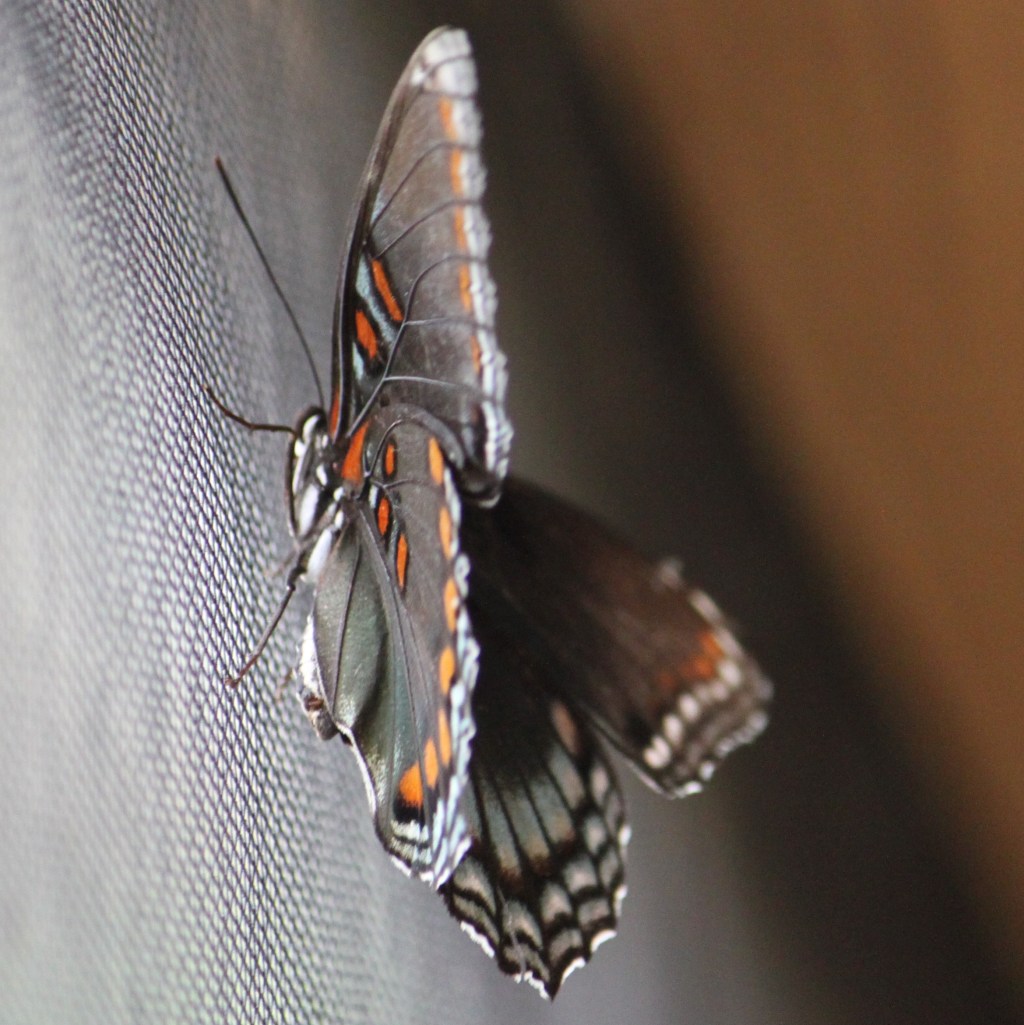
sign \ˈsīn\
n.
1. Something that suggests the presence or existence of a fact, condition, or quality.
2.
a. An act or gesture used to convey an idea, a desire, information, or a command: gave the go-ahead sign.
b. Sign language.
3.
a. A displayed structure bearing lettering or symbols, used to identify or advertise a place of business: a motel with a flashing neon sign outside.
b. A posted notice bearing a designation, direction, or command: an EXIT sign above a door; a traffic sign.
4. A conventional figure or device that stands for a word, phrase, or operation; a symbol, as in mathematics or in musical notation.
5. pl. sign An indicator, such as a dropping or footprint, of the trail of an animal: looking for deer sign.
6. A trace or vestige: no sign of life.
7. A portentous incident or event; a presage: took the eclipse as a sign from God.
8. A body manifestation that serves to indicate the presence of malfunction or disease.
9. One of the 12 divisions of the zodiac, each named for a constellation and represented by a symbol.
Signs are all around us. Both literal and symbolic, they call attention to things. They are life’s placards that assert ‘this is’ or ‘this I like…’ They hint at the invisible or point out what is present in physical form. They vary in mode but share one thing in common: they help us see things.
~~~
Butterflies
I was raised with butterfly wings.
Kids growing up in the county have few cultured distractions. Ours were of mud pies, frogs and outdoor games. My sister and I ran barefoot with the kids who lived behind us at a place called “The Corner” where our perpendicular back yards met. The kid who lived on the actual corner lot between us, David, was an only child, an organizer and the center of official Corner activity.
We caught lightning bugs and kept them in mason jars in our bedrooms at night. We screamed as bats dodged us under the glow of street lights. We did a lot of things as evening overtook our days. It was all well and good, but I was a girl of the sunlight.
Much of my summer was spent alone in my own back yard. In the presence of a Great Pyrenees nanny, I explored the fascinating world of a single blade of grass and the joy of the color lavender in the tiny ground-cover flowers abloom on the hill by our garden. My favorite activity was hoping for and seeing the glorious butterflies that graced the yard on summer afternoons.
The small gossamer-winged beauties were my favorites. Like any smart country kid I knew where they came from – the rips in my little-girl tights released them into the sky. From the place where my knee covering once was, a newborn baby gossamer soared into the world. I knew this because after pondering the location of the missing tights fabric following many spills and bloodied knees, one day I spied a butterfly on our Episcopal church playground just as it left my tights and entered the skies. I had a lot of things figured out early on.
My parents put an addition on our house after my little sister was born, allowing me a bedroom of my own. After thoughtful reflection and reflective study of the Sears Roebuck catalog, I settled on my choices for new furnishings: canary yellow shag carpet, antique white dresser with gold accents and matching canopy bed covered in sheer white fabric dotted with hundreds if not millions of happy butterflies. Green, blue and yellow, they danced around and below me, giving rise to a million little-girl thoughts and many happy little-girl dreams.
David
Around this time David got sick. On trips to the community pool, he was cold, and it must have been 90 degrees out. Something was off, and it wasn’t long before leukemia was diagnosed.
A kid’s chances were not so good in those days. He spent stretches of time in and out of Duke Hospital. He was doing well near Christmas, so his mother took him shopping for goodbye presents for his band of loyal followers.
Soon enough the day came when our R.N. mother gathered us at the breakfast table to tell us our David was not coming home. My big sister cried. I took it all in quietly and discussed it with my second-grade teacher at school that day. I was pretty sure he had flown away on butterfly wings. My teacher listened respectfully and did not disagree.
The parents with the grace to buy “goodbye gifts” for their only child’s friends were again grace-filled at the funeral home. His mom consoled my inconsolable big sister with something new to us. Girls, when you look up in the sky at night, look for the biggest, brightest star. That’s David’s star. If you look for it when you need it, he will always be right there with you.
If she was right, I figured between butterflies and stars, we had both day and night covered quite nicely. Everything, including David, was going to be a-okay.
That summer I attended Bible School with a friend. It was not David’s church but a neighboring Baptist church. We were all acquaintances or kin – even distant kin of the kind twice removed by marriage on your mother’s side. We knew each other.
Mid-way through our week together my teacher began discussion of salvation and believer baptism. I wasn’t sure I had even seen such a baptism as I had been sprinkled, just like my baby sister two years earlier, at our down-the-road Episcopal church.
The conversation worried me. Worse, it made me sad. With all the nerve a young girl might muster at such a time, I raised my hand. “What about David?” I asked.
The table fell quiet as our teacher gathered the words. There was a thing called the age of accountability. A boy who died before he could choose Jesus was by default saved by God’s loving mercy. All Baptist heads nodded in agreement.
As class ended, the church pianist, who would later be kin by way of her daughter’s marriage to a cousin on my mother’s side, played her favorite hymns and sang for me as we waited for our ride. It eased my sadness, but my Episcopal soul was still uneasy. I needed more blessed assurance.
That night, lying in my new butterfly bed, the answer came.
The next evening in class, I raised my hand again.
To my Bible School teacher and class I offered a lesson on grace as only a child can. I talked about the butterflies – how caterpillars wrap themselves up like it’s all over, but then they become butterflies. I said I didn’t think God would keep a butterfly from flying just because it died while still in its cocoon. I shared about the stars and promised if they would just look up in the sky, they would know with certainty all was well with David.
As I left that night, the pianist who would later be an in-law by way of a cousin’s marriage nodded knowingly and smiled. I was right.
Heidi and Doug
Twenty years later my people gathered at the same cemetery where David was buried.
We were not members of my mother’s childhood church and visited only for funerals. This time it was our beloved Grandmother Blalock, whom I called Heidi.
Her death was preceded by days of rain. I feared a funeral and especially a burial defined by black-clad mourners with dark umbrellas, not for us but for our Uncle Doug.
Heidi’s very special son of 53 years, Doug had never been without her. He needed clarity, predictability and routine. The few short days without his Mama provided none of that, and we could already see him slipping. He went from stunned with grief to giddy that his long-time love Kathy would join him at the funeral.
This was Doug’s imaginary wife who visited when he felt alone or misunderstood. During Heidi’s illness and especially after her death, Kathy was present. She looked a lot like me, said Doug, and her daughter resembled my little cousin, Katie.
In Kathy and her daughter, Doug had connection, familiarity, love. He was slipping, slipping, slipping.
There were clouds the day of the funeral, but at the appointed hour, the veil lifted and the sun appeared. By the time we gathered at the cemetery for Heidi’s August burial, it was humid and bright.
When the procession of vehicles entered the church cemetery for graveside rites following the formal service, we were heavy. All minds were on Doug, riding shotgun in my mother’s car. It was such a burden to even think of him, to imagine what lay ahead for him, alone and crumbling.
Each time I had this thought, the impossible reality of his future and his pain, a yellow butterfly appeared. It happened at the cemetery entrance and later as we made the anticipated left turn onto Papa Blalock’s row. During the short service the yellow creature of hope flitted without a care above the open lawn and humble privet hedge close to the road.
Two cousins stayed behind to see Heidi’s burial to completion. I lingered as long as I could push my luck without insulting my older cousins. Girls and women simply didn’t do such things. Mom took Doug home, and I left alone. Every time the deep sinking feeling hit, just when I thought the world would never be okay, a yellow butterfly flitted freely by.
She danced in the sun along the hedge at the cemetery exit as I made my way home.
There would be many days I had that fleeting feeling, and many flitting yellow butterflies.
Doug was soon found standing barefoot in the snow by the road at home. He was waiting for Kathy to pick him up so they could go out or run away together to some distant, happy place where mothers do not up and leave their something-special sons.
Inside the trailer he once shared with Heidi, he established altars to his mother flanked by childlike weaponry to protect him from invading bands of witches and warlocks. Kathy and her daughter had moved in along with her mother, who looked like Heidi, and they communed with him in a parallel universe no one else could enter.
All the way to my new home down the interstate and many, many days after, the butterflies signaled their presence.
Phone call after phone call with my mother was the same.
Doug is in the hospital.
He can’t live alone.
He was released to a group home.
Butterfly. Butterfly. Butterfly.
On a final trip to visit Doug during his many hospitalizations for autoimmune liver failure, I saw two butterflies, clearly a pair. Papa Blalock and Heidi, I thought. They were headed east with me toward Duke.
Trailing behind them as if trying to catch up, a smaller free-spirited beauty, flitted erratically – up and down and side to side. It looked like a smiling half-crazy, stunted child yelling, “Hold on, wait up, Mama and Daddy – I’m coming!”
He would not live more than weeks.
Opie
The whole time I lived near the mountains I was two-timing Heidi. I had another grandmother there. She was Opal and went by “Opie.” She was really less grandmother and more sister or partner in crime.
Together we discussed the finer points of college administration at the school where we worked. She had opinions. I laughed loudly at them and listened to her recollections of times past. We hit K-Mart together on Friday and Saturday nights where we raided the yarn aisle so Opie could knit throws for friends and family.
She lived to spend time with her in-town granddaughter, especially over dinner. I was her driver, picking up her number-one grandkid and heading to Hwy. 70 for dinner at Olive Garden or Red Lobster.
One year younger than Heidi almost to the day, she had a certain something special I loved. Unlike Heidi, she was educated, outspoken and known. Although she hailed from a small town, she was well heeled, traveled and well read. They seemed so different, yet not.
When I returned from Heidi’s funeral, my answering machine was filled with messages from Opie.
Mitzi, Opie. Where are you? Are you back?
Opie. Maybe you remember me. Call me, would you?
Mitzi, it’s Opie. Please call.
As instructed, I reported to Opie’s home right away. “Come in child, tell me about it. I want to hear every word.”
I sat on the floor at the foot of her easy chair in her new senior-living apartment and shared everything – the rain-soaked drive across the state, the funeral, the butterflies, the inevitable misunderstandings and tensions that happen in every family.
Most of all, like us, she was concerned for Doug.
Opie insisted again and again, “Write it all down – now, while you remember.”
She directed me to the place in a cabinet where she stored her own memory book. Together we walked through the stories of her adolescence. There was her first telegram from a boy, received when she was still too young for such things. A wedding photo showed a young woman in a flapper-esque dress filled with all the hope in the world, recognizable as Opie only through her distinguished nose. It was beautiful. She was beautiful.
We talked for hours. She shared stories I had not yet heard about her husband’s life and his death and how deeply it impacted her heart. I understood better her interest in Heidi. They shared much, and Opie knew her life had been much easier than Heidi’s.
As I tucked her memories back in their place for safe keeping, she spied the Christmas gifts she had already bought for her family and walked me through the assignments – which gift for whom, and why.
In a few weeks I finally heeded Opie’s direction to write the stories of Heidi’s illness, death and funeral. I rode my bicycle to the college campus just blocks from Opie’s new retirement community. Sitting under the shade of a wise oak tree, I penned the notes.
Eager to show Opie, I headed home for a shower before coming back to town. Throughout my writing session and all the way home I saw the butterflies in diverse and glorious patterns.
When I stepped out of my bathroom, eager to return and share my writing with my friend, a gaggle of butterflies danced outside the large bedroom window that framed my view of the Catawba River.
In that instant, even before my telephone rang, I knew.
The call was from a friend at the college. She had heard from a friend of Opie’s who lived at the same retirement center. Opie had collapsed on the elevator. It was bad. They were not able to find her family. No one was available to meet her at the hospital. “Will you go?”
“Of course,” I said.
I drove slowly, already aware of what I would find. I cried as I followed a trail of flitting butterflies to our nearby hospital.
An ER doctor shared she was gone. The 90-something friend of decades who saw it happen was caught in a panicked fugue and had paced her apartment all afternoon, unable to call anyone. By the time she did, it had been hours. Opie joined the saints triumphant while blocks away I sat writing my stories under the shade of a wise oak tree. She would have been 87 in days.
I returned to the place she lived and asked to see her friend. In as tender a way as you can share such a thing with a confused woman 65 years your senior, I broke the news.
At church that Sunday I reported to Opie’s family’s spot on the front left pew.
Her daughter-in-law and I exchanged stories. She was in her yard with her family in the days after Opie’s death. A black swallowtail butterfly found them, dodging the trio and dancing in their faces. Opie’s number-one grandchild swatted at the insect. Her mother screamed, “Stop! It’s Opie!”
Also that week my house guest in town for the funeral sat on my front porch taking in the view. I walked outside just as a black and blue butterfly made herself known. Like the in-town grandkid, my friend waved it away. The butterfly only became more daring, flitting in her face.
“Opie!” I said with a smile.
Later Opie’s family invited me to her apartment for a September holiday gift exchange. Her children gave me her Christmas china, and I shared with them their early Christmas presents, explaining why she had made each selection.
Her granddaughter shared a gift I will always treasure – one of her grandmother’s prized and often worn butterfly pins. I regret never asking Opie why they meant so much.
~~~
Dreams
I have only one of any significance, and it’s a good one.
A few weeks after Opie’s death, I closed my eyes to slumber and traveled back in time.
In my dream I was on the lawn of an old Southern home. There were many people present, all making their way toward a stately two-story estate, the kind with oak trees and generous front porches with ferns and rocking chairs.
The guests wore period dress and moving slowly toward some event inside.
Accompanying me and directing me by the elbow was Opie.
We walked through the front door, and Opie nudged me to walk ahead of her up the wide staircase. The guests parted to let me through.
At the top of the stairs were my grandparents, he in an old-fashioned suit and she in a simple white dress. They were the age when they first met. Standing between them was a man holding a Bible.
Opie held a steady hand against my back. Heidi looked at me and smiled.
They were getting married, and they had waited for me.
~~~
There have been other signs in my life. Not all are as charming and ethereal as a ringlet-clad little girl’s coming of age with butterflies.
The fact is most signs have appeared at times of great pain. It’s hardly the point of a sign to show itself when life is easy.
+++
Once, for no known reason except an overwhelming feeling of doom I couldn’t kick, I sat on my front porch overlooking the Catawba River and cursed every dead friend and relative I had for leaving me. When the ire of their betrayal reached a fevered pitch, I asked for a sign. Show me if you’re here. Just then I spied in the evening sky over the local minor-league baseball field a tall and perfectly formed image of the Energizer bunny, aglow in pink and blue hues from the stadium lights below. If I was not yet angry at God, I would soon become upon seeing the bunny an insolent teenager really pissed off at her father. The next day I learned of a not-yet-known tragedy that unfolded the previous night as I cursed the universe – one that would require that I keep going and going and going.
+++
There is nothing more assuring, no greater sign, than to share space with a person who has a foot in both worlds. I have seen this twice. Both times the dying shared in simple terms the vision of there, of what is already with us and moving toward ultimate completion. There is no greater honor than to share a moment of this transition and to feel the tangible peace.
+++
Joining the butterflies in the ethereal skies are some other signs. I had a year of hawks not so long ago. They soared above my house and into my heart. A young hawk even fell from the sky into my back yard. The lesson that year was the development of wisdom. Just as a young red-tail hawk must grow into his wisdom, I, too, had a year’s flying lessons that led to the development of new wisdom.
+++
Similarly, this is the year of the dragonfly for me. They represent change and the releasing of illusions that hold us back. They are lucky, too, and they dance in swarms around my three dogs and me on our daily walks. I have heeded their call to let go of that which does not suit. Things are changing, and something good is sure to come around.
+++
Without question, the most consistent and assuring sign in my 44 years is rain. Whether for death, grief, times of reform or plain old change, rain is a reliable companion. It has been my experience the Universe acknowledges a significant event with the water of life. There are too many examples to list. I will share just one. The night my father died there was no precipitation in the forecast. As my sisters, my mother and I left the hospital ER in the pre-dawn darkness one Viola soul short, my little sister, knowing my long-held rain theory, tapped at my shoulder. “It’s raining,” she said. The drops fell lightly on the real estate leading from the hospital to our cars but not further than the small parking lot. “Of course,” I replied with a smile and walked gratefully to my car.
~~~
Signs are well and good. It’s the interpretation that’s tricky.
I know what these signs mean to me. They might mean something else altogether to you, or maybe you think I’m a nut. That’s okay. In any event, what’s important for all of us is to remember how very little we do know in regard to the spiritual.
It’s a tough reminder. We people like to know. Worse, we like to be right. Where we humans get stuck is in allowing one another to believe differently. Too often we judge those who hold different views as wrong.
Your belief is wrong. What a strange concept.
My senior English teacher shared this approach. Near the end of our high-school career, she asked a classmate his opinion on a reading assignment. He gave his tentative answer. Her immediate and certain reply: “You’re wrong.”
Without hesitation I came to his defense. “You asked his opinion.”
“Yes,” she said, “I did. I also happen to disagree with him. I went to Duke. He didn’t. I’m right!” She smiled with satisfaction.
I never thought much of her or her alma mater again.
It is weakness of ego that keeps us from allowing other people to believe differently – or letting them hold their own interpretations, even if they differ from ours, and allowing their beliefs to stand as legitimate. We fail to let each human soul come to faith in the way that is most appropriate to him or her. The question I so often want to ask is how are we hurt or threatened by giving someone else the bandwidth and respect to hold and express her own beliefs?
The answer is simple: we believe we stand to lose.
Fear is a contagion. It is fear that encourages us to disallow another’s divergent belief. Fear leads to annoyance, limitation of others, hate and a whole host of other traits and behaviors that share one thing in common: they do not come from love.
Requiring others to believe as we do or judging them when they do not comes from weakness based in fear. I claim it as one of the few Truths in life.
~~~
I studied theology at a Lutheran college. The night before baccalaureate, my primary professor rang my dorm room. “Mitz, I need the faith statement before you walk at graduation. Your grade is already in, but I need the paper.”
“I know,” I said, admitting my guilt. The long-dreaded reality was finally at hand.
That night I sat down at my trusty old-school typewriter to disappoint my theological mentor once and for all.
Here’s how I began.
I am not sure what I would have written as my statement of faith had I written it during my sophomore year. As best I remember, I faced this assignment with a great deal of hesitation. Afraid of being honest with myself and with you on the matter of religion, I agonized over the correct assemblage of Lutheran theology. Should I draw from the creeds, Scripture or the Book of Concord? How do I make a convincing argument for something I am not sure that I can commit to? How can I be authentic without disappointing a mentor and a friend? With all of these questions and more in mind, I made the only incorrect choice in choosing not to deal with the problem at all.
Now facing the end of my undergraduate career, I have had, as we are both aware, more than enough time to think about all of this.
Charming, right? Leading by spotlighting the negative is unwise. I didn’t yet know this pearl of life wisdom.
Reading it now I can smile – at my procrastination, the awkward writing style and what I know now to be the outcome, my grade and final position with my college mentor.
Back then I was just plain scared, convinced I was the only person to ever have the nerve to say such a thing to the good professor. I may well have been.
I’m not sure if this next part was a subliminal message to him not to kill me. The fact is the subject at hand was universal salvation vs. the one-way to approach embraced by much, but not all, of Christendom.
I have always favored the image of a God of grace and compassion, full of understanding, wisdom and mercy, who, just as the loving parent desires to teach the child a lesson for playing in the road, pulls him from the path of the oncoming car before impact, gives us free will and tells us to try to live by the rules. But, because we are human, we fail, and whether or not we ultimately say yes to him, we will all be saved because God said yes to us first at the beginning of time, and He is not willing to lose any one of us for the sake of teaching us a lesson.
A God who said, “Yes!” to us first – that’s good stuff!
Once I was warmed up for the academic beating I was sure to receive, I finally addressed the heart of the matter.
If that is the case, one could assume that all religions are paths to the same God. God was sensitive, intelligent and creative enough to make possible a religion that could attract and invite people of every nation and every color. If God was loving enough to do this for us, how dare we as Christians claim that ours is The Path to salvation? How dare we enter other countries as missionaries to convert people of other religions to Christianity if God created a beautiful religion, a pathway and invitation perfectly suited for those people? It seems to me that this is not only a great disservice to our brothers and sisters, but a greater disservice to God.
It’s probably at this point my grade hit the cover page, but I’ll come back to that.
The task of claiming my beliefs still lay before me. Simply rejecting so-called ‘mainline’ protestant theology would not fulfill the assignment, and I knew it.
I do believe that Ultimate reality exists.
That was a good call. I must have hoped this sentence would prevent the mid-life heart attack no doubt waiting in the wings for this beloved teacher.
I went on to list a series of signs, evidence of a merciful and loving God. This sure-fire *proof* included experiences on my travels in Western North Carolina and through the Americas. Also listed was the second-to-last stanza of “For All the Saints” (Lutheran version). In all cases, I offered personal experiences of times in my short life when I stood still in awesome wonder without a clue for ‘how’ but in solid assurance of the ‘what’ of the Great Mystery.
It happened again when I was working in the yard of the brick factory in Huehuetenango and the little girl in the tattered pink dress who was walking by stopped to watch and caught my eye. Bam! Instantly I knew she was the one. Knowing no Spanish, I signaled for her to stop, and I ran to my pack to retrieve the prize. Yes, I returned with a brand-new red and black, shiny, one-of-a-kind Mickey Mouse pencil. I handed her the pencil, and, smiling, we both looked into each other’s eyes, and immediately we knew each other. She knew everything about me, and I knew everything about her. We had known each other forever, and we would never forget. She ran away repeating, “Gracias, gracias…,” until she was out of sight, clutching her pencil. I felt so completely whole at that moment, not because I was proud of my act of benevolence, but proud that the girl who knew everything about me still accepted me for all that I was. No one, American or Guatemalan, saw us, and I told no one because I didn’t need to. She knew, and I knew. We both knew, and nothing else mattered.
Silly, isn’t it? Yet, it happened. Emotional? Yes. Beyond reason? Absolutely. I know, at times intellectually and at times emotionally and even spiritually, that God exists, but I don’t know ‘how’ God exists. Is Ultimate reality to be found in Yahweh, or Allah or in the God of the Trinity? In Buddhism? Taoism?… I am not convinced that anyone has found the answer. If that is the case, where am I to look?
True to me, I transitioned with a question and not a definitive answer.
The close was another psychological masterpiece, a ploy to soften the reaction of this surely disappointed dad-like teacher whose children I babysat and whose laundry I folded for half my distinguished college career.
All I can commit myself to is the existence of a loving and merciful Creator who is exponentially more complex than I. I don’t know how this Creator is made manifest, and I don’t know the terms of the relationship…Perhaps someday…but until then it is comforting to remember that Arius, Marcien, Pelagius and all the others who messed up, only did so in honest attempts to wrestle with similar questions. For now the best I can do is to keep an open mind and try to remain honest with myself and with others.
Brilliant. Name dropping with humility. The showing-off of the much-maligned heretics’ names served as a kind of substance filler in a short statement of faith that humbly offered only that of which I could be sure.
The bottom line for me was, and is still, love.
God said, “Yes!” to us first.
Who are we to deny this same grace and mercy, this love, to ourselves, our neighbors and our distant kin across the seas? How dare we assume we know anything except the love-padded bottom line? How dare we offer anything else to God’s children, even our enemies?
Living in love is hard; I don’t deny that. Still I believe this is our goal, each and every day. Across faiths and belief systems, love is the universal message.
You must know by now Mrs. Westmoreland’s high-school judgment antics foreshadow the grade I received on this capstone assignment in my theological career that wasn’t.
Scrawled on my cover page were two grades: A+ for sincerity and D for content. There was also a barely-legible note likening me to some general theists out there and wishing me the best for my future.
The truth is there was plenty of content for a sophomore-year assignment. I even hit the page minimum for length! Further, I proved myself in my four years in the department in the time leading up to the writing of this paper.
For example, there were three final exam options for the class in which this now long-overdue assignment was made.
Option A: several intense essay questions.
Option B: 100 true/false, fill-in-the-blank and short answer questions.
Option C: write the course.
I wrote the course, and as best I remember I missed only a point or two for spelling and even earned some extra credit in the process. Substance was not my issue.
Being honest about being different was my real problem.
Plenty of people we studied were rejected by the church. Martin Luther was excommunicated by the pope and labeled an outlaw by Holy Roman Emperor Charles V. Others faced worse fates, persecuted for heresy and even burned at the stake for their beliefs. If ‘A’ is a scarlet letter, ‘H’ for heretic is big, black and bold.
It would be one thing if I studied in a more conservative branch of the faith, one that does not accept religious study through historical and contextual scholarship.
To diminish questioning or a divergent path in the tradition that launched the Reformation, rooted in the academy – come on. I did and still do object to the D for content, though I wholeheartedly accept the A+ for keeping it real.
I left school frustrated and somehow sure the problem between my modest beliefs and the certainty of my classmates and professors meant something was no doubt lacking inside me, even if God did say, “Yes!” to me first.
~~~
I want to be fair to the good professor. He was, and is, an excellent teacher and exceptional human being. He was the mentor I hoped to emulate through my forced prosaic writing and super-gigantic words. I wanted his approval and feared the content would serve to divide.
The episode of the long-overdue faith statement was one brief chapter in the book of my undergraduate study. The paper and grade(s) did not define my journey or the relationship with my college mentor.
It goes without saying any professor who gives a student three years to complete an incomplete course, running right up next to graduation, dispenses a great deal of grace.
~~~
In this and other ways, my gracious professor was at home in among the department faculty. Also richly diverse and textured, the teaching body was both simultaneously learned and kind. There was not one type of thinker or uniform belief system. All were priceless treasures.
One professor reminded us of Bob Newhart, his humor understated and wry. True to form he taught the consistent and logical rules of New-Testament Greek. He laughed and smiled easily, once telling us of his first day of Ph.D. study at Duke when he naively asked his wife to pick him up in front of the large stone building. It took hours for her to find him.
Upstairs in the building [closer to Truth] were two philosophers. They were at the same time men of faith and the proverbial thorn in the side of any discussion on the matter.
The most colorful teacher by far was a Polish Jew who converted after World War II. He attended a Lutheran church in my day but was schooled in Christian theology by Baptists, among others. He looked like Mr. Magoo meets Santa, walking around campus hands clasped behind his back staring at the ground, deep in thought. Once he ended up deep in a hole, forgetting the renovation of the building as he headed home for the night.
What seemed like tall tales were commonplace of him. He once chased chickens at a European convent with a cardinal who would become Pope. Early in his academic life he drove around Durham in his old, rusted full-sized Chevrolet as portions of the Dead Sea Scrolls rattled against the metal body of the car. “Oh yes, I forgot about these,” he said aloud in his specific Polish accent, scratching a nearly bald head as he discovered the source of all the road noise. My favorite story is his telling of the day he could have ended a war by dropping his suitcases on the open parade car passing below him while en route to school in England. His parents saved his life by having him flee the rising political tensions. Along his journey, he stood on a bridge, watching a grand parade. He learned later the two prestigious men riding in the open car below were the harshly totalitarian duo of Hitler and Mussolini. “I had two bags. There were two men. I could have ended the var,” he said calmly with a shrug.
My favorite member of the department was the one I knew least. Transparent as the day is long, his name was Dr. Glass. He hailed from my dad’s hometown, and my grandfather was once bookkeeper for his widowed mother. In small-town terms this made us [almost] distant kin.
He was the most evangelical of the religion faculty, yet he seemed the most grace-filled as well. At my young age, it hardly seemed possible one could be both. I had our teachers stored neatly in their simple storage boxes. He defied all I knew.
It was Dr. Glass who offered the greatest of gifts in the forming of my faith. I don’t remember the course or other details. All I know is Joe Glass stood before the small cohort of students, roughly half Baptist and half Lutheran, and said the words that set me free. “Some of you accept the Bible literally, the infallible word of God. Some don’t. I can only tell you what I believe. Jonah wasn’t swallowed up by a whale. No – there’s a kernel of truth there we’re meant to receive. Maybe he was swallowed up – we’ll never know. But one thing’s for sure: you will not ever be swallowed up by a whale.”
Smiling and exuberantly in love with his God, he ran between the old-school chalkboard and new-fangled white board in our 1980s classroom in a small house on campus. “Look for the kernel of truth! One day you’ll be dragged down so low by something you can’t change. That’s what it means to be swallowed by the whale. You’ll learn then you have to go down –> down –> down to finally be raised up. And when you get to the top again, you’ll never be the same, no you won’t. Look for the kernel of truth in God’s Word! Fallibility is not the real question. Look for the golden nugget! Look for the kernel of truth!” He was in ecstasy at this point.
What I didn’t know at the time was Joe Glass was losing his eyesight. By the time I graduated and later returned to work at the college, he was legally blind. But his vision was greater than anyone I knew.
I sometimes stopped in his upstairs office [closer to God] and announced myself with a soft knock and shy greeting. “Yes, it’s you, Viola, I remember. Come in, Ladybug, come in.” We would chat briefly about his family, recent trips home and current scholarly interests.
Some years later a photo of the school’s newly retired faculty appeared in our alumni magazine. The “graduating” class numbered six. Five faces looked straight ahead at the camera. Joe Glass looked slightly to one side if not strangely through the camera, his chin tilted upward and the smile of an innocent child writ billboard large across his face.
Joe Glass saw a brighter light than the flash of a photographer’s camera. He did what most of us do not do in this life; he saw the face of God and smiled in exuberant jubilation.
He said, “Yes!” back with his whole heart.
~~~
It is so much easier to say, “No!”
That’s not true. It is easier to say, “Yes!” just as it is easier to be nice or to allow grace rather than to fight, label or limit. It’s just that our world encourages the opposite, the shutting down of love. The world breeds fear, and fear is the opposite of love. In the acid environment of fear, love cannot flourish.
If you ask me, this whole earthly ride is about learning, again, to say, “Yes!” like children, to become Dr. Glass – for ourselves and the whole world, especially those without the voice and choices of the so-called average American.
We are to say, “Yes!” even when it makes no sense at all – when we are persecuted, suffering, or otherwise low –> low –> low in the belly of a whale, when loving our enemies is so illogical it is the only answer. In fact, especially then, we are called to release our egos and return the “Yes!” we so undeservedly received ourselves.
If we drop our own self-judgment in favor of the eternal “Yes!” we can then offer the same grace and mercy to the rest of our world.
~~~
My own faith walk began in Episcopal school, dancing among the butterflies of the paschal mystery. It led to religious education, which by definition inhibits openness by promoting definition and division. Such study often requires descriptive judgment. Do you believe like Us or Them? Are you right or wrong?
From there I followed a meandering path to Koinonia Farm and the God Movement by way of a volunteer stint in southwest GA. Clarence Jordan, whom I like to think of as “Uncle Clarence,” was in fact my first theological ‘people’ after my brief personal encounter with Dr. Glass. Uncle Clarence’s statement might be boiled down to this: Live your “Yes!” Less talk, more authentic, simple action.
Still I stumbled along, seeking kinship among different brands of Lutherans and Baptists, finding a degree of dissatisfaction with them all. I tried some other things and always wound up as alone as I felt the day my faith statement, my thesis of personal belief, was returned with a D for content.
Around another bend, many I met through my job introduced me to real faith of a type I never knew. Let God do God’s job. If God is for you, who can be against you? I can hear the words spoken as I type. From some I learned to understand the rise and role of prosperity ministry, although I still respectfully disagree. They taught me to see real evil in the world – in human form and in complex institutional evil that can take firm hold of a place when people allow it in through division and self-interest. The Devil is busy they might say. What God loves the Devil finds interesting. They taught me to believe and to pray in new ways. I am forever grateful to these friends. They gave my faith more content, real color.
Since then I have discovered more theological kin.
They are unique individuals who share a contemporary take on Uncle Clarence’s walk your talk, unassuming radicals who call themselves and the church to do rather than simply claim appropriate dogma. They offer in beautifully concise sentences what it took me more than 20 years and thousands of typed words to articulate. How we live – how far we go to offer love – is the real test, the answer to the universal riddle in all circumstances. What matters most is the choice made in this moment, and then the next.
My path meandered through higher education, the world of nonprofit development and through the magical (and sometimes dark) forest of real-world experience. At every turn, I returned to the basics: love, love, love.
~~~
The nature of faith is not my platform. For me belief in the Divine is an important theme that weaves through my perspective on most anything. Also in my toolbox are social science, math, psychology and a host of other neat things. Together they make for Mitzi-colored glasses.
Don’t get me wrong, I believe life is ultimately spiritual in nature and I strongly believe in what I once called “Ultimate reality,” mimicking my scholarly mentor. It’s just that I don’t have the academic underpinning to claim theology as my ticket. I don’t hold the credentials, nor do I seek them. I am an expert on nothing.
Having said that, there are still some things I believe.
Here is my best attempt at a 2012 rewrite of my 1990 statement of faith.
~ Life is one great big, beautiful Mystery. Quoting a friend, at base it is spiritual in nature, though not necessarily in form.
~ This great, loving, creative life force is active in our world and our lives. It said, “Yes!” to us first. It is our job is to say, “Yes!” back by offering the same to ourselves, our earthly family and the world, including the physical creation.
~ Christianity is my framework for faith. True to my checkered past I maintain universal leanings. Consistent with my childhood need for reassurance about David is my college-aged certainty God would not create a path for all people only to later to damn them for it. Eventually I found theologians who gave my belief a label: universal salvation.
~ Like the Joe Glass lesson on scriptural interpretation, I accept some Truth at face value. Other parts make most sense to me as allegory. In other words, there’s a kernel of Truth as it applies to my life and living.
~ While we are headed someplace out there or wherever, there are portals to that place in our earthly world and even our inner beings. All of creation reflects the Divine. The Eucharist is not our only connection to what some call “the already and not yet.” My experience is we are connected to the spiritual in remarkable ways. God, the Universe, the Great Mystery – whatever you call it – it is made manifest in and around us every day. The signs are everywhere.
~ I believe the appropriate movement in life is forward. By that I mean life tends toward life. All actions that support the positive direction in moral, spiritual and practical ways are life-affirming. Life is a million chances to say, “Yes!” with our whole hearts. Actions that say, “No!” and that divide people and shut down or impeded spiritual growth, even conversation, arise from fear and not love.
~ Similarly, I believe life moves toward union or reconciliation, the eternal “Yes!” We are to follow this path. Love is a simple example. Loving or forgiving your enemy is a tougher way to seek union. I studied under people who believe the mainline protestant church should move toward reconciliation with Rome. I take this understanding further to all of humankind – people of all faiths and no faith at all. In the end it’s God’s job to judge who is in or out. I still believe in the God whose final word is grace in lieu of harming a wayward child to teach her a lesson. My God gifts an ultimate, “Yes!” Because of this, I don’t need people to believe as I do. I can look for what unites us or what they offer that I have not yet heard. In spiritual learning, for me, more is more. Anything I don’t believe I can simply discard without denying the humanity or inner divinity of the person who holds the belief. I don’t need that person to be wrong any more than I can confirm I am right. I don’t give in to the slippery slope of fear that asserts being open is an invitation to disaster. That does not reflect my God.
~ My faith requires that I act. For me it is not enough – or even the point – to hold a set of beliefs. Dogma doesn’t do much for me. How my daily living shows my beliefs is most important. We are asked to live by example, to also embody rather than simply claiming faith in word or creed.
~ In regard to how we relate as human beings, the answer to the riddle is always love.
~ I know as a mere mortal I can’t ever possibly understand it all. I can never be certain of anything. If nothing else, I know how much I don’t know. All I can do is stand in awesome wonder, respecting all of God’s creation as I stumble along my spiritual path. I may very well be wrong (D for content) but not without honest wrestling with the big issues (A+ for sincerity).
~ Whatever the path one takes, I believe Good always wins in the end.
Once again, my faith statement boasts more universal truth than specific creed or dogma. Now I happen to claim some of that and hold it close. I think doctrine is important, but to me it is not what is most important. In fact, the tendency to define and divide, which is necessary for us humans, also keeps us from experiencing the transcendent. It is both a curse and a blessing.
Perhaps if I had stated it like this in 1990, my grade might have been different. I couldn’t, however, because I was not yet where I am right now – and not the same place I will be tomorrow.
Perhaps if we can afford ourselves this much grace we might also offer it to someone else?
[That’s disingenuous. I don’t really intend it as a question.]
~~~
Saying, “Yes!” is how I hope to live. To me it is gratifying and fulfilling and, frankly, the only thing that makes sense, even when it is difficult.
I find the nature of much religious conversation to be deeply un-gratifying and dis-satisfying. It seems it is the nature of people to limit, divide and even fight. Religious, political and social conversations tend to focus on the universal, “No!”
We approach so many things in life like an argument. Have you ever been in a good fight? If so, you know what I mean.
Fighting is woefully unappealing, dissatisfying to the bitter end. It’s as though our choices are to lose our candy to the neighborhood bully or end up the victor, eating every last dissatisfying bite. With both extremes there is something missing. Fighting leaves an aftertaste that keeps me feeling uneasy, wanting more and all the while disgusted by the very process.
We in the West like to argue.
Ironically the “Enlightenment” left us stunningly unenlightened. The superiority of reason over heart and spirit disconnected us from necessary parts of ourselves, our very souls. As a result we are like ships listing too heavily to one side. Again, there is something missing.
If “Yes!” urges us toward completeness, roundness and wholeness, “No!” keeps us trapped in linear isolation from ourselves and one another. “No!” keep us disconnected from the Divine.
“No!” can be visualized as a game of tug of war. It is simple, linear and based in power. Someone will win, and someone will lose. It is black and white. May the best (wo)man win.
We see it in all aspects of human, and especially Western, life. Here are three brief examples from the ‘history of religion’ book.
(1) Filioque
This word divided the early church. Yes, just one word divided East and West in the early history of Christian believers.
I’ll keep the history lesson short. There were two early centers or “sees” of Christianity. They shared beliefs. One reacted strongly to a controversy over the full divinity of Christ. Eager to overcome this recent heresy, the so-called “Arian controversy,” the Western church inserted a word into a creed it shared with the East. The Eastern group resisted. There were some other differences, including the use of icons or graven images. After centuries of disagreement, they split. Just like that the one became two. It was no longer “the Church.”
This was a move away from completion and fulfillment.
What’s interesting is all these years later the camps are now talking. Maybe they overreacted in divorcing over a harmless little word. Maybe the socio-political climate was a tad complicated. Maybe one word isn’t ‘all that’ in the grand scheme of things. Maybe each group is more fulfilled in partnership with the other. Maybe they weren’t in disagreement after all.
Perspective is humbling.
(2) Creationism vs. Natural Selection
Science is at odds with religion, or the reverse.
Either the Big Guy did it all and we can deny science altogether, or science is King and religion is made up by wimps and stupid people who need something on which to lean.
This age-old war of extremes baffles me.
My question is this: why does it have to be one or the other? Are we so simple that there isn’t room for more complexity? Must it be This OR That? Is our sense of Mystery that limited? Is our sense of the limits of science also that limited? Can it not all be of God? Can we leave nothing unknown?
I guess I have more than one question.
The proponents of both camps believe they know it all. Heck, I thought we were all just human – that perhaps all Truth may not be known to us just yet, that often more than one thing can be True at once.
The answer to the question of the universe and life itself is far greater than all of us together. And yet we fight, sure of our positions.
(3) Chick-fil-A
This lesson keeps rolling around.
Jesus spent time with prostitutes and tax collectors. In the ongoing question, “WWJD,” we need look no further than the words ‘outcast’ and ‘undesirable.’
How then we continue to justify creating boundaries that draw some ‘out’ rather than ‘in’ amazes. Prostitutes, tax collectors, brown people, women, homosexuals – someone is always in the position of un-belonging. It’s one boring old story.
I know of a congregation where members locked arms to keep people of color from entering – get this – in the 1980s. [Fill in the blank group here] excluded by the church for [fill in the blank justification based in specific social context.] It’s all the same old stuff.
Chick-fil-A was a test, a chance to show our spiritual development.
The answer was not appropriate dogma or doctrine. The answer was not support of free speech or bold counter protest. The answer was not appropriate Biblical reference or economic reinforcement.
There were no “sides.”
It was a riddle, and the answer was love.
Most of us failed the test.
~~~
Prolonged discussion of the failures of Western thought is equally dissatisfying.
How about a look at how it might work when we get it right? How about a positive lesson from the history books?
Once upon a time the world of medicine was split. The West focused on diagnosis and treatment, medicine as science, the ‘what.’ The East focused on energy, connection and nuance, the ‘how.’
It took a long time for the West to realize it stood only to gain, not lose, by incorporating the way of the East. The two function in different realms. They can peacefully coexist. One is of reason, the other of spirit and mystery.
Not too many years ago lots of us scoffed at the mention of yoga, meditation and reflexology. Many insurers now offer premium discounts to members who participate in these ancient practices. It turns out the way of the East supports a healthy body and a healthy bottom line.
Today even science supports the notion of prayer in support of healing. It is positive energy with tangible results. We still can’t explain the how, but we agree as to what. Science proves it, after all!
Now revisit this example of West embracing East and substitute the word ‘religion’ for ‘medicine.’
We don’t stand to lose by taking on a new way of looking at things. My beliefs are not at risk for considering another way of being.
The way of the East, centering and contemplation, can only stand to strengthen my core beliefs and even my Western doctrine. My faith is made stronger by learning to be still with God in silence.
All too often we believe in order to be right, someone must be proved wrong. We are intolerant to the end. Again, to reach to WJ[mightinfact]D, “judge not” comes to mind as a starting point.
We stand only to gain by being open to another point of view. My faith is not watered down by understanding another and allowing it to stand as legitimate. I do not lose respect by offering it first.
Conversely, by disrespecting what is different, I limit and devalue myself and my God.
There are no sides in the end. Moving toward completeness, the eternal “Yes!” is the only answer that lasts.
~~~
All this talk of extremes and fighting has me on edge. My starting point in this piece on faith was ‘signs.’ I would like to end in the certainty of the ethereal as well.
All the doctrine and dogma in the world cannot compete with in-the-moment knowing. Incarnation is best experienced through personal encounter. Concrete words sometimes fail when undefined feeling is sure.
That kid I wrote about in college, the Guatemalan girl with the tattered pink dress who confirmed for me the existence of a loving God – she is Leslie. Another in Mexico is Marta Patricia. Both looked at me with dark eyes that mirrored the depth of their Creator, and in that moment I knew far more than four years of theological education could teach.
I have two closing anecdotes, both deeply meaningful to me. They tell the tale of signs that can only lead to the question, “What are the chances?”
What you do with the answer is up to you. I’m clear on my position.
~~~
When I was in college, I signed up with Big Brothers Big Sisters.
My ‘Little,’ Elizabeth, was nine when we were matched. I was 19. Though I was technically the ‘Big,’ it often felt as if she were the adult in charge. Her shy presentation was no cover for her underlying spunk and determination.
I often felt guilty for not being enough for her. I knew full well I had allowed a match with a kid who sought regularity and loyalty, and I was set to graduate in less than two years. Always one to set myself up for failure, to live down to my own expectations, I sometimes let days go by without calling. It was often mature Elizabeth who found me and pinned down the commitment for our next outing.
After leaving school, the miles and months between us grew.
I moved often and without fail lost contact with my Little. She moved, too. When guilt and self-loathing for my inadequacy eventually overcame my inaction, I made the one guaranteed connection. I sent a letter to a relative at 1012 Grove Avenue. While the envelope was addressed to her, the message to the adults in charge was always the same: “Yep, it’s me again. Once again I lost your kid.”
I was ashamed of my Big Sister incompetence, but a reach to Grove Avenue always worked.
Six years ago I sat unpacking books in another new affordable, “interesting” rental. Heavy on my mind was Elizabeth, now a full-grown adult, no doubt still ahead of me in the organizing department.
In just three years I had as many addresses, and we were once again separated. I knew she lived in a new town. I knew she was not listed. Ashamed to once again admit defeat to Grove Avenue and missing my little mama, I feared we might never connect.
Just then my phone rang. It was the caterer for an upcoming work reception. He had lost the food order for our event and needed it before shopping the next morning.
With reservation and no small amount of frustration, I agreed to drive to my downtown office at 10 o’clock on a Saturday night and call him with the particulars.
I scurried into the building with a cautious eye over one shoulder. Once inside I disarmed the security system. True to Murphy’s Law, the contact on the entry door chose that night to malfunction.
When the alarm blared, I knew I had just 60 seconds to climb three flights of stairs, unlock one door, find the paper containing the contact information for the alarm company and share my password. Not only would the police down the block be dispatched, if I missed the one-minute deadline, the agency would be fined $500. In short, I was toast.
At the 70-second mark, I breathlessly greeted the second-shift call center operator.
“I need your help. Can you call off the police – I can hear them coming.” [pause to catch breath]
The voice on the line was calm if not distant. “Okay, we’ll do that. Tell me your name.”
“Mitzi.”
“Okay, Mitzi, tell me your address and passcode.”
I shared the information.
“Okay. So your name is Mitzi, and you work in downtown Durham for abc, and your passcode is xyz.”
“Yes. This is all my fault, I’m not good at this stuff. Can you help?” I tried to disarm the not-so-impressed operator, if not the alarm, by accepting responsibility for the goof and making myself small in her presence.
“Okay, one more time. Your name is Mitzi. You work in Durham at abc, and your passcode is xyz.”
“Yes, that’s it. Is it too late? Can you stop the police?”
In a familiar sassy voice with a nearly audible grin, the operator replied, “Mitzi Viola, this is your little sister, Elizabeth.”
~~~
The last story I offer is not mine, but that of a friend and his family shared with me several years ago.
My friend, Sandy, attended my down-the-road Episcopal church, although we didn’t know each other until I was about 36. It was his connection to my childhood playground of butterflies that led to a conversation about the meaning of the creatures in my life. Our talk led Sandy to share his family’s story that is perfect bookend to close this essay. (Life is just that good.)
Sandy is from New England. There was a time his family gathered each summer at Thrumcap Island in Maine.
During these family outings, Sandy’s elderly aunt would inevitably separate from the group. She could always be found sitting high above the cliffs at Thrumcap Ledge in communion with monarch butterflies.
The butterflies were on the Maine coast awaiting their year-end migration to Mexico. They were present each summer, but they always sought out Sandy’s aunt and no one else. They danced around and above her. The monarchs were her calling card.
About a decade ago, Sandy’s aunt died in a massive fire that swept through her old wood-frame farmhouse. The fire burned so hot that nothing was saved.
When it was over, all that was left was a steel beam that ran the length of the farmhouse, her iron bedframe and some bones, still in her bed. She had never awakened.
Weeks later her son, Sandy’s cousin, had a chance to talk with one of the firefighters who was present that night. Her son shared the story of his mother’s connection to the monarchs at Thrumcap Ledge.
The firefighter was dumbfounded. “Didn’t anyone tell you?” he asked. “The night of the fire the monarchs were here by the hundred. As we fought the fire, they danced in the flames.”
~~~
Signs are all around us. Both literal and symbolic, they call attention to things. They are life’s placards that assert ‘this is’ or ‘this I like…’ They hint at the invisible or point out what is present in physical form. They vary in mode but share one thing in common: they help us see things.
The signs of love are everywhere.
Open your mind, heart and soul. Lower your defenses and let go of fear. Sit still with the divine within and around you. Accept that you may be wrong, that the Mystery of your God is far greater than anyone’s capacity to understand. Offer the grace you find to the rest of your world. Move in the forward, life-generating direction.
Embrace the eternal “Yes!”
Say, “Yes!” back with your whole heart.
© Mitzi Viola, 9/2/12


 Lost Corner Letters
Leave a comment