Journey
The open highway is an incubator for soul journeys.
Most days we use life’s roadways for travel – the practical act of moving from here to there. Other times we use that endless black ribbon to run from fear or discomfort. When we’re willing, however, the precious time spent driving can serve to deliver us from one place to another in the spiritual sense. We start out one way and end up a different creature altogether.
Removed from the daily grind, under appropriate conditions we may sift through the layers of hopes, dreams and even hurts we have tucked away for future reference. Among fresh sights and sounds, we travelers discover anew who we are and what we seek.
The act of trans-portation offers the promise of trans-mission of meaning or the trans-formation of our own beings, if we but allow it.
The mid-century farmer, preacher and unlikely social instigator Clarence Jordan called the miracle of this transformational power by its Greek name, metanoia, literally to be changed through. It is the journey the caterpillar takes to become a butterfly.
In his sermon Metamorphosis, Jordan said, “The new order of spring has demanded that the caterpillar change his form in order to be ready for the demands and the needs that are impinging upon him. That we call ‘metamorphosis’…[the] Greek word ‘metanoia’ is almost exactly the same word but we don’t have an English word for it. It means ‘to go through’ – not the transformation of the body, but the transformation of the mind and of the soul that equips you for a new order…the happiest, most joyful thing you’ll ever do is to metanoia.”
~~~
Destination
I took a trip recently. Scratch that – I set out on a journey.
My destination was a tucked-away little place in southwest Georgia. Sumter County is humble. Sure of itself and honest as the day is long, it is proud but not boastful.
It is the site of Charles Lindberg’s first solo flight, the home of the 39th President of the United States and the fertile soil if not red dirt that nurtured the world’s most respected housing organization.
Little known to outsiders amid these accomplishments is a 573-acre farm that helped change American history and, at least in my mind, the world.
The place is Koinonia Farm. It is named for the Greek word for ‘community’ and is located just south of the highway connecting the towns of Plains and Americus. My guess is you have never been there, and if it weren’t for a certain U.S. President, some might not even know of it.
To understand the significance of Koinonia Farm it helps to understand its co-founder, the farmer, Baptist preacher and Greek scholar named Clarence Jordan.
Clarence was born in Talbotton, GA, in 1912. The son of the owner of the town bank and general store, he was raised with privilege in this small Southern crossroads. Clarence was involved with the church at a young age, although dissatisfaction with the state of the church and its role in society plagued him. In graduate school he wrote:
“The question arose in my mind, ‘Were the little black children precious in God’s sight just like the little white children?’ The song said they were. Then why were they always so ragged, so dirty and hungry? Did God have favorite children? I could not figure out the answers to these puzzling questions, but I knew something was wrong. A little light came when I began to realize that perhaps it wasn’t God’s doings, but man’s. God didn’t turn them away from our churches – we did. God didn’t pay them low wages – we did. God didn’t make them live in another section of town and in miserable huts – we did. God didn’t make ragged, hungry little boys pick rotten oranges and fruit out of the garbage can and eat them – we did. Maybe they were just as precious in God’s sight, but were they in ours? My environment told me that they were not very precious in anybody’s sight. A nigger was a nigger and must be kept in his place – the place of servitude and inferiority.”
With a growing ache from these and other normalized injustices in the war-era South, Clarence ventured to Sumter County with his wife, Florence, and friends Martin and Mabel England. Their goal was to establish a community that lived its Christian principles, not with pious words and creed but belief put into daily action.
Their arrival in 1942 and modest but revolutionary practices would incite deep division in the wider community that would last more than a half century.
~~~
Schism
A fracture in a family or social system can feel more like an amputation. It may create such a suffocating loss or separation that all involved are held in indefinite suspension, less than whole because of it. It’s the kind of divorce that is forever dissatisfying in spite of who is right or wrong. It is precisely this type of division that plagued Koinonia and Sumter County almost from the start.
Koinonia is an intentional Christian community committed to racial and economic justice and founded on four guiding principles:
- Treat all human beings with dignity and justice.
- Choose love over violence.
- Share all possessions and live simply.
- Be stewards of the land and its natural resources.
From the perspective of 2012, a full 70 years after the community’s founding, these principles seem basic, even easy. In 1942, the simple act of sharing a meal with a neighbor of another race could get a person killed.
With customs never before seen in the county or our country for that matter, Koinonia was in every sense an experiment. Clarence called it a “demonstration plot for the Kingdom of God.”
It was not a flash-in-the-pan kind of place but rather a working farm where time moved slowly and intentionally according to a higher set of standards than lynching and Jim Crow or even municipal government. That said, the Jordans, Englands and the Koinonia community did not seek to stir up trouble or even be known for anything except good people trying to do what they believed was right.
There are volumes written about the violence that ensued in response to this non-violent community. I will share some highlights.
- The Ku Klux Klan took interest in the group after black and white members were seen sharing meals on their land off a rural highway. The threat of violence increased when it was learned these new neighbors paid all farm hands the same wage, without regard to race, unsettling the local economy.
- There were regular drive-by shootings at the farm. The residents feared for their lives, and especially for the well-being of the children. They stacked firewood around the farm’s communal homes to block stray bullets that passed during the night.
- When the farm’s produce stand was bombed and the county began a boycott, neither buying from nor selling to the farm, Koinonia resorted to a mail-order business to stay afloat, adopting the slogan “Help us ship the nuts out of Georgia.” Increasingly the group relied on the support of sympathetic churches outside the Southeast.
- In one night the Klan and its supporters chopped down 300 pecan trees in an attempt to shut down the farm. This action and others like it forced the slaughter of 3,000 chickens in a single tragic day because no one would buy them and Koinonia simply could not afford to feed them.
- School desegregation in the 1950s heightened the tensions and violence. The children of Koinonia suffered most. As the struggle over the schools boiled, the farm’s black families were sent to communities in the North for their own protection, and Koinonia dwindled to just a few brave souls.
- A preacher turned Civil Rights activist named Martin King shared a budding friendship with Clarence. After a 1961 visit to Sumter County, Dr. King called its sheriff “the meanest man in America.”
The deep divide between the peaceful Koinonians and the community at large grew into a schism it seemed would never heal.
~~~
It would be easy to demonize the citizens of Sumter County for terrorizing Koinonia, but it would not be completely accurate. A quick judgment without fair consideration of the culture and times is dishonest.
When level-headed Clarence finally lost his humor and his temper after the bombing of the roadside produce stand, he wrote to a friend, expressing his all-consuming hatred for the people who would place his family and friends at risk for the simple act of living their faith. Later he shared that when he realized their violence was bred by fear of the Koinonians’ unusual way of living he was able to again see his enemies as God’s children and overcome his rage.
We each have the daily choice of approaching life in love or fear. Koinonia lived the way of love. The times, however, promoted the way of fear, including very real hatred and violence. It is not excusable, but it is understandable given a scan of the history books.
Most of us live a blended path of love and fear. In this way the townspeople of Americus and nearby communities are no different than most humans. While some were certainly misguided and extreme in their behavior, we are still they.
Clarence would be the first to acknowledge our shared brokenness as humans, though he would have preferred to live without the bullets and bombs.
He was a prophet, and prophets are generally hated because they are not understood until many years down the road. His only mistake was being ahead of his time.
~~~
Healing
More than 20 years ago, I spent several moons in Sumter County.
While I didn’t live with the community at Koinonia, I was blessed to know people with red clay on their shoes from the place. I visited on my bicycle and listened to stories. This access to living history and the transformational movement called Koinonia Farm still directs how I live and work in the world nearly a quarter of a century later. The farm and its people have strongly influenced literally half my life.
It is this connection that took me below the gnat line in Georgia during September for a celebration of Koinonia’s 70 years of witness to the world and a 100-year celebration of Clarence Jordan’s birth.
More than anything, for me it was a chance to reconnect with my core beliefs and spend time with people of the same persuasion, ‘ordinary radicals’ as some call themselves, folks with a shared vision of our purpose in the world and a simple, new-old way of living.
I also had the chance to see dear friends and visit the volunteer house I once called home in a blended neighborhood halfway down the hill on S. Jackson St.
On the surface, things seemed the same.
Sure, there were new restaurants and the usual signs of progress one might find in any town. There’s a new hospital thanks to an errant tornado. Otherwise, Americus looked and seemed just as Americus should.
A deeper look and the real evidence of grace and change were presented by our event organizers.
The Saturday welcome was offered by the president of the chamber of commerce – the group that once blocked all trade with Koinonia, holding its members as virtual economic hostages on their own land, a cause of great inconvenience and suffering. “If there’s anything we can do to help you while you’re here, please let us know,” she said, closing with details on how to reach them. It was overstated but sincere.
Down the road in Plains, an open door at a local business proclaimed complementary messages that not long ago seemed impossible: “Koinonia Farm Products Sold Here” and “Come In, We’re OPEN.”
A certain U.S. President opened the gathering by sharing some thoughts. On his way into the historic downtown theatre, he paused on the sidewalk at the town’s Walk of Fame to take note of Clarence Jordan’s name embedded in a brick. Not only is he listed as an important leader in the town’s history, the gentle farmer is honored alongside some of the men who tried to hurt him and who might have killed him given the right opportunity. While life made them adversaries, in death they are equals.
Perhaps the greatest change in Sumter County is the blending of cultures. In short, there are no longer “sides” in regard to Koinonia and the community at large. Instead there is one community.
Much has changed, but there are still improvements to be made. The vast majority of African Americans continue to live on the other side of the tracks from most whites. But there is no longer voluntary segregation of Piggly Wiggly grocery stores – the Black Pig and the White Pig. In fact there is no Pig at all, just one outlying Winn-Dixie and one in-town Harvey’s.
Every little step forward is a move toward completion, toward the unity and reconciliation once dreamed into being by a Ph.D.-toting farmer and the brave souls of different races who risked a great deal to walk a more sacred existence than many of us ever dare to imagine.
~~~
Completion
How healing occurs is a mystery. While it can be a moment or a “fix,” most often it’s an imperfect process punctuated by high and lows and many brave attempts to try again, stumble and then start over yet again.
Our scars, fevers and even our diseases are our bodies’ efforts to resolve imbalance so that we might move forward and continue living. It is all a move toward wholeness. Even if we lose our lives, our ill health was an attempt to fix what needed fixing. Sometimes, as in the case of a broken bone, the repair creates a stronger being. It’s rather remarkable.
Spiritual healing is more complex. Addiction, depression, self-destructive habits – all are efforts to survive when we are wounded and cannot thrive. They are psychic attempts to wrap ourselves in a protective cocoon until we are strong enough to emerge with butterfly wings. They are acts of great, if not sometimes twisted, adaptation with an eye on survival.
I had the honor of sharing time with a few friends on my recent journey. In our own ways, each of us is moving toward wholeness, whether reunion, reconciliation or acceptance. Facing separation and renewal in unique stories, we are kindred human souls in different places on the equalizing path of peace.
For me personally, the journey served as a way to bring completeness to what I call the “bookends” of this part of my life. The trip offered a dozen if not a thousand reasons for gratitude and reminders of how beautiful life really is.
~~~
My second-to-last stop leaving town was Koinonia Farm. We spent two days discussing this living community, its past and current relevance, yet we spoke of it from the university campus several miles away. I needed red dirt on my shoes.
A friend and I shared a walk through a butterfly-dotted pecan grove. We greeted a stoic bull and his best gal under the watchful eye of a gentle-giant Great Pyrenees field guard.
Clarence’s writing shack still stands. In this place he translated the New Testament into the language of the people, his Cotton Patch Gospel. Here he penned letters to the preacher named Martin King. It is in this modest shed he drew plans for the farm and envisioned an improved future as bullets and controversy rang around him. In this place he died from a heart attack in 1969, the year I turned one without any idea how profoundly my life would be influenced by a little-known Baptist farmer scholar in southwest Georgia.
~~~
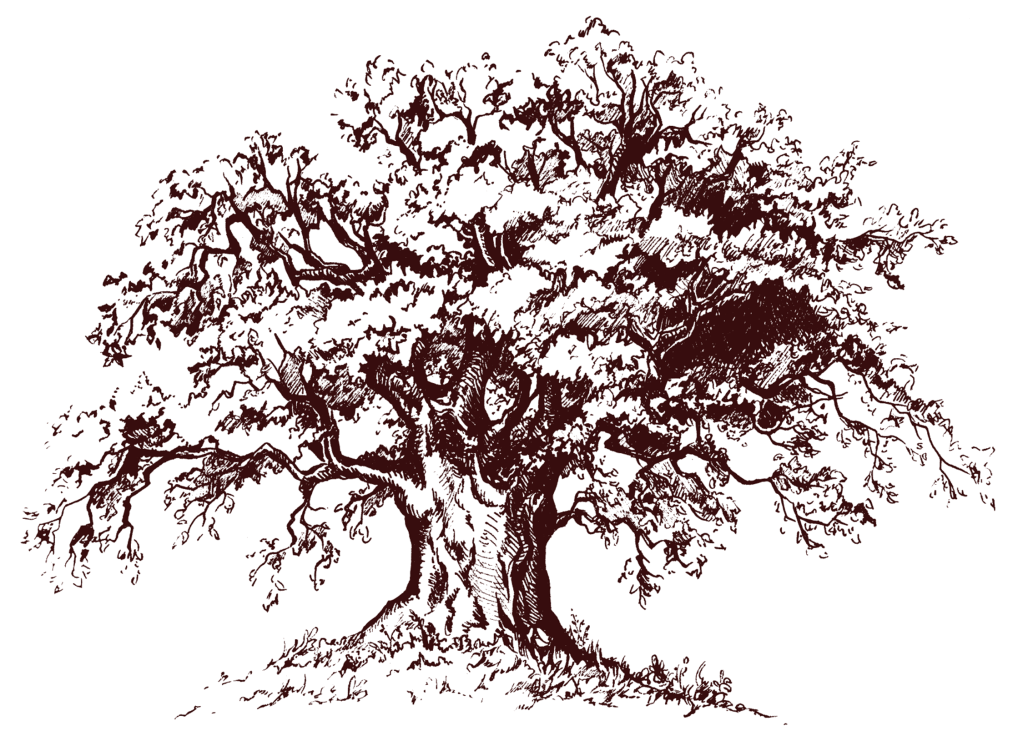
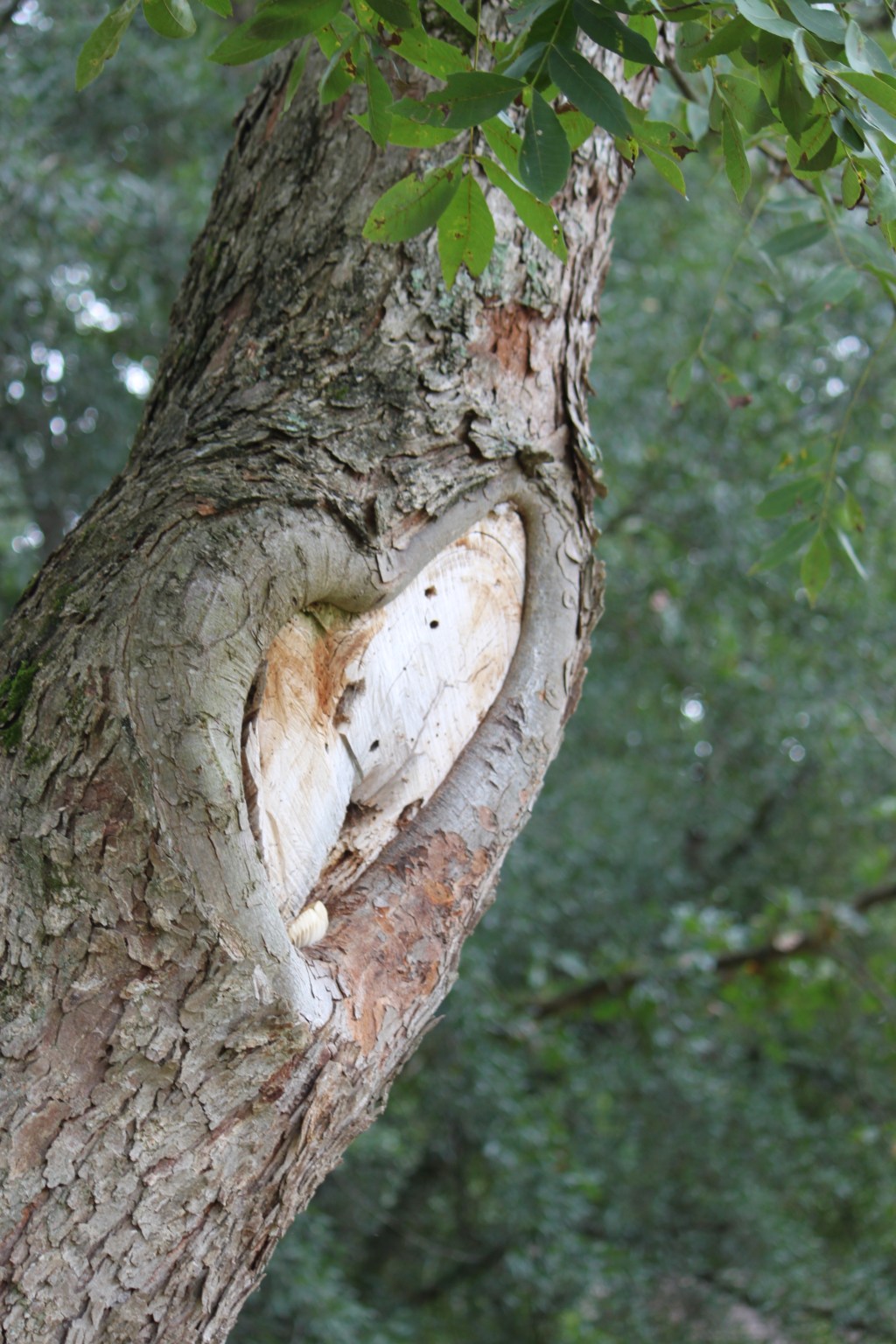
Near this small sacred shack stands a particular pecan tree among many. Like others on the farm through the years, it bears a scar. Just as Koinonia was once separated from Sumter County at large, the tree survived its own amputation.
At the site of a hefty missing lower limb, there is a beautiful and curious heart-shaped scar.
In this way, the tree protected its injury so that it could continue to move toward life and repeat the daily act of bravely doing its best pecan job in this demonstration plot for the Kingdom of God.
Whether it survived the execution of 300 trees or is part of the replanting, this sacred being beside Clarence’s thinking space stands witness to a community of people rooted in love and committed to the conviction that the world here and now can reflect divine principles – and that this in fact is our daily responsibility, in every situation.
The next time you’re impatient with yourself or your kid or another of your kin and you feel like it’s all just useless and never going to change, remember the 70 years it took Sumter County to make public affirmation and offer full acceptance to Koinonia Farm. Time heals. It helps to take the long view.
When you worry about the violence among peoples of different races and faiths and the overwhelming need of so many people in this world, remember the example of a peace-filled community that survived and even thrived amid great violence, standing witness to the power of the Good and changing the world one act of love at a time.
When you need a sign of hope, remember a heart-shaped scar on a pecan tree standing amid fluttering butterflies proclaiming their metanoia on a modest farm with few amenities and much integrity surrounded by red clay roads and generous fields in the heart of southwest Georgia.
© Mitzi Viola, 10/5/12
~~~
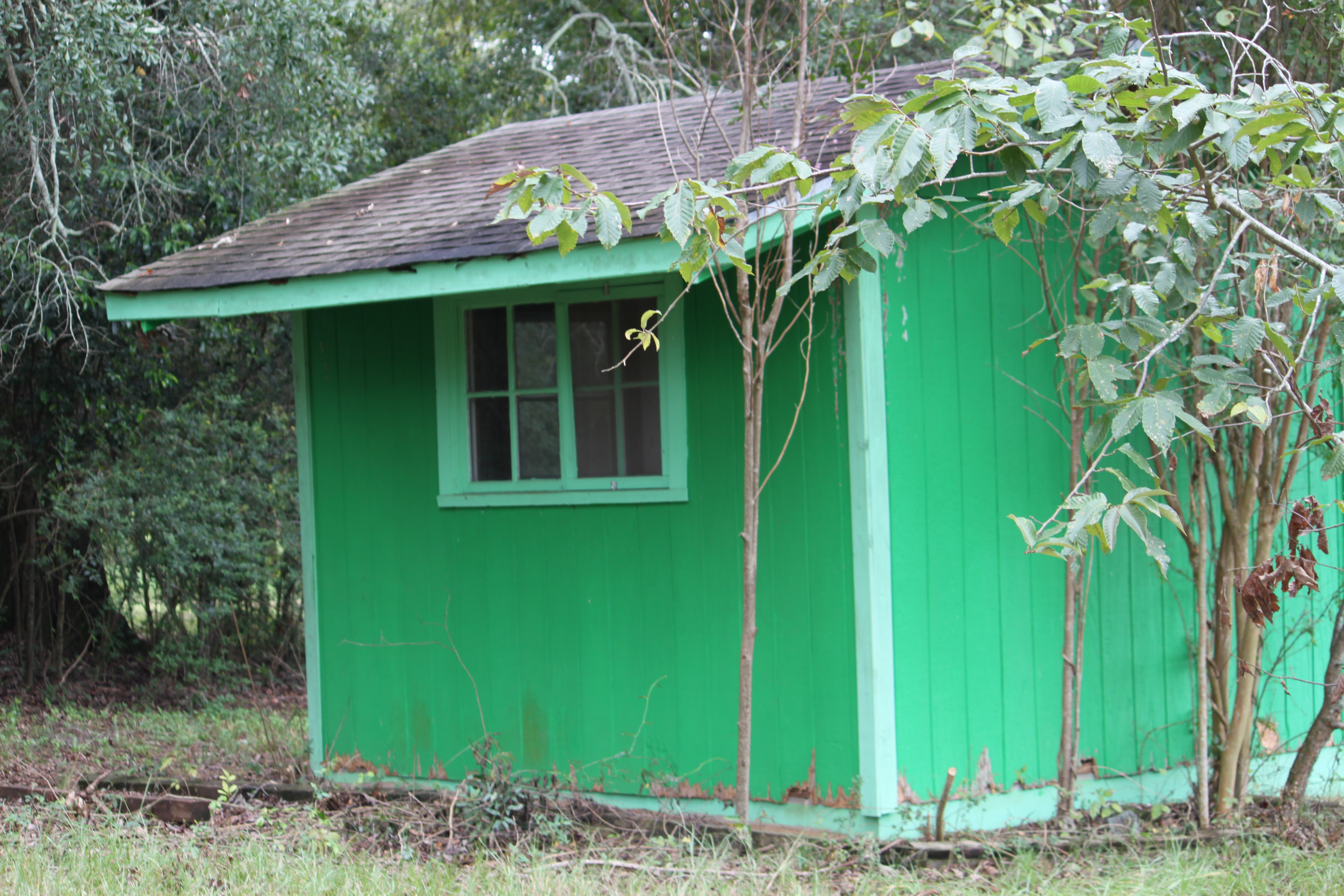
Clarence’s writing shack
~~~
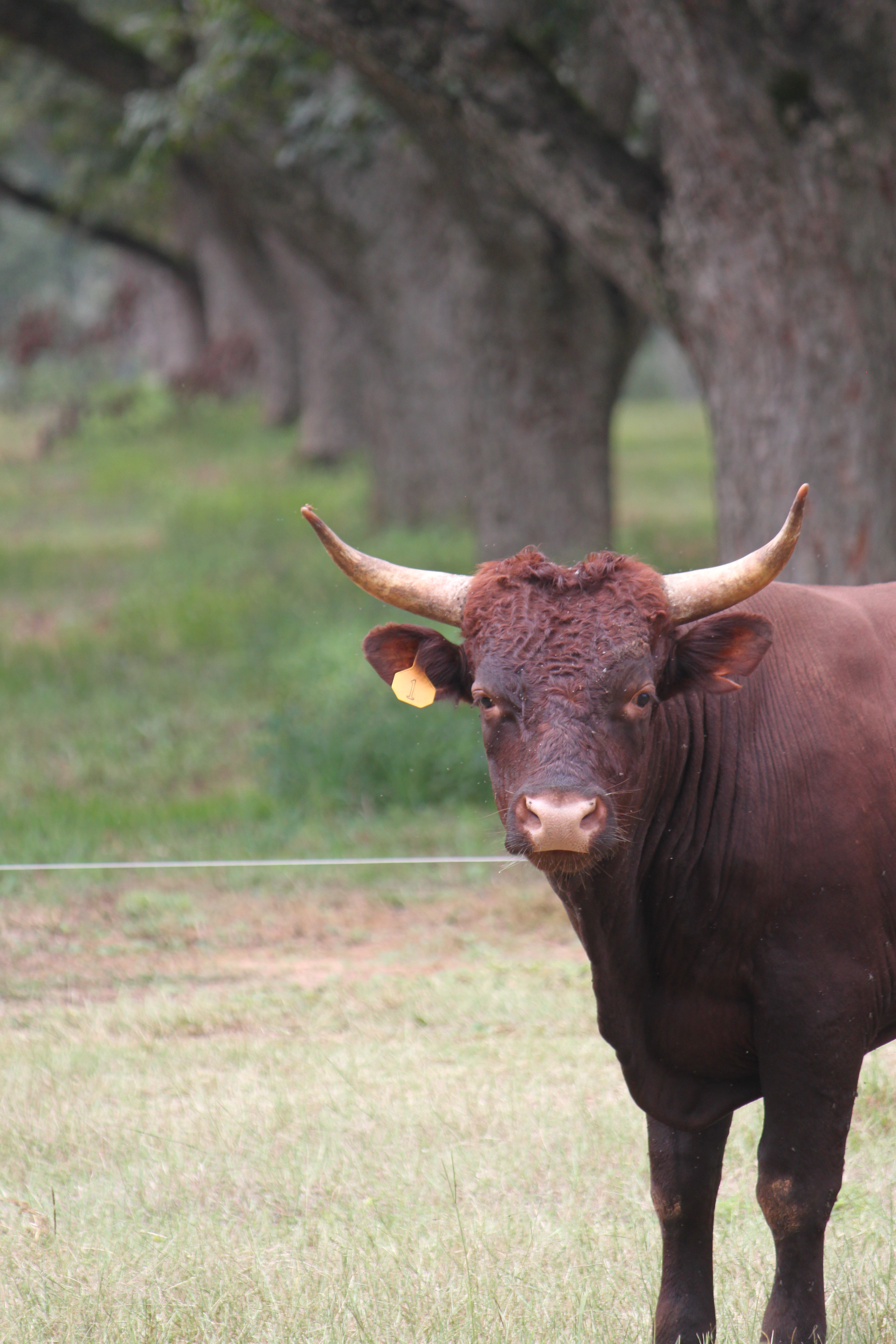
Like Koinonia, a quiet force
~~~
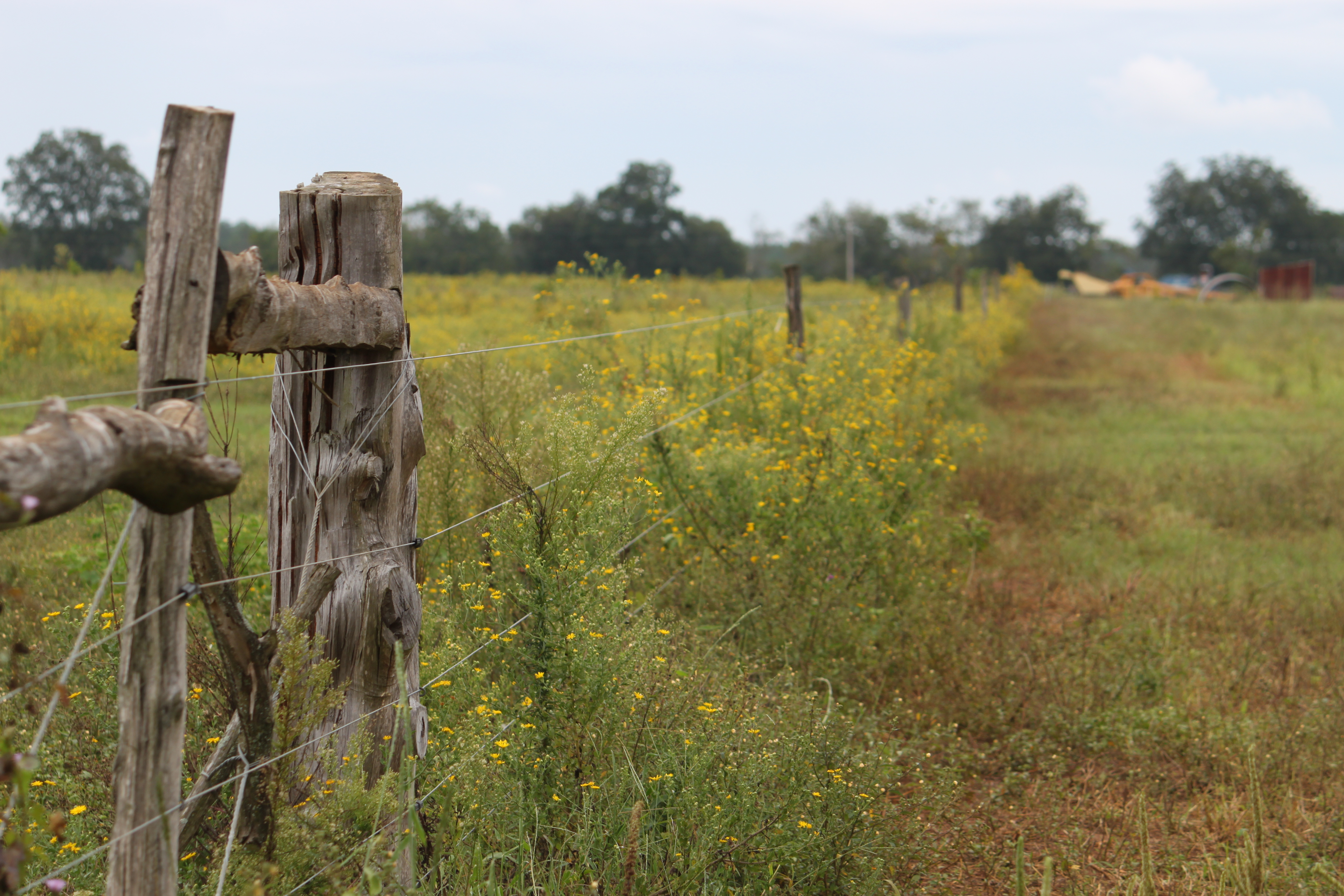
A look back home
~~~
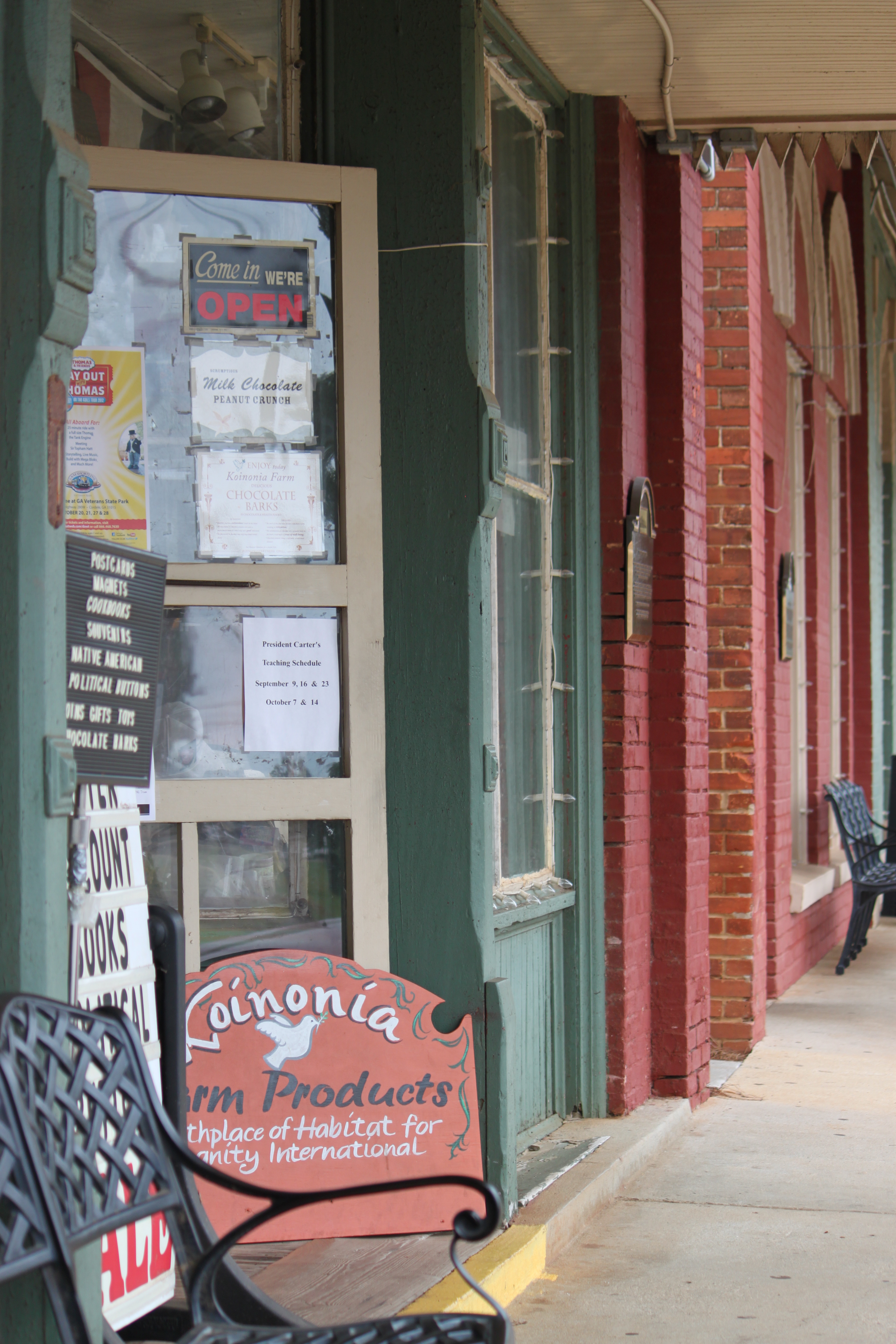
Signs of hope at Plains Trading Post
~~~
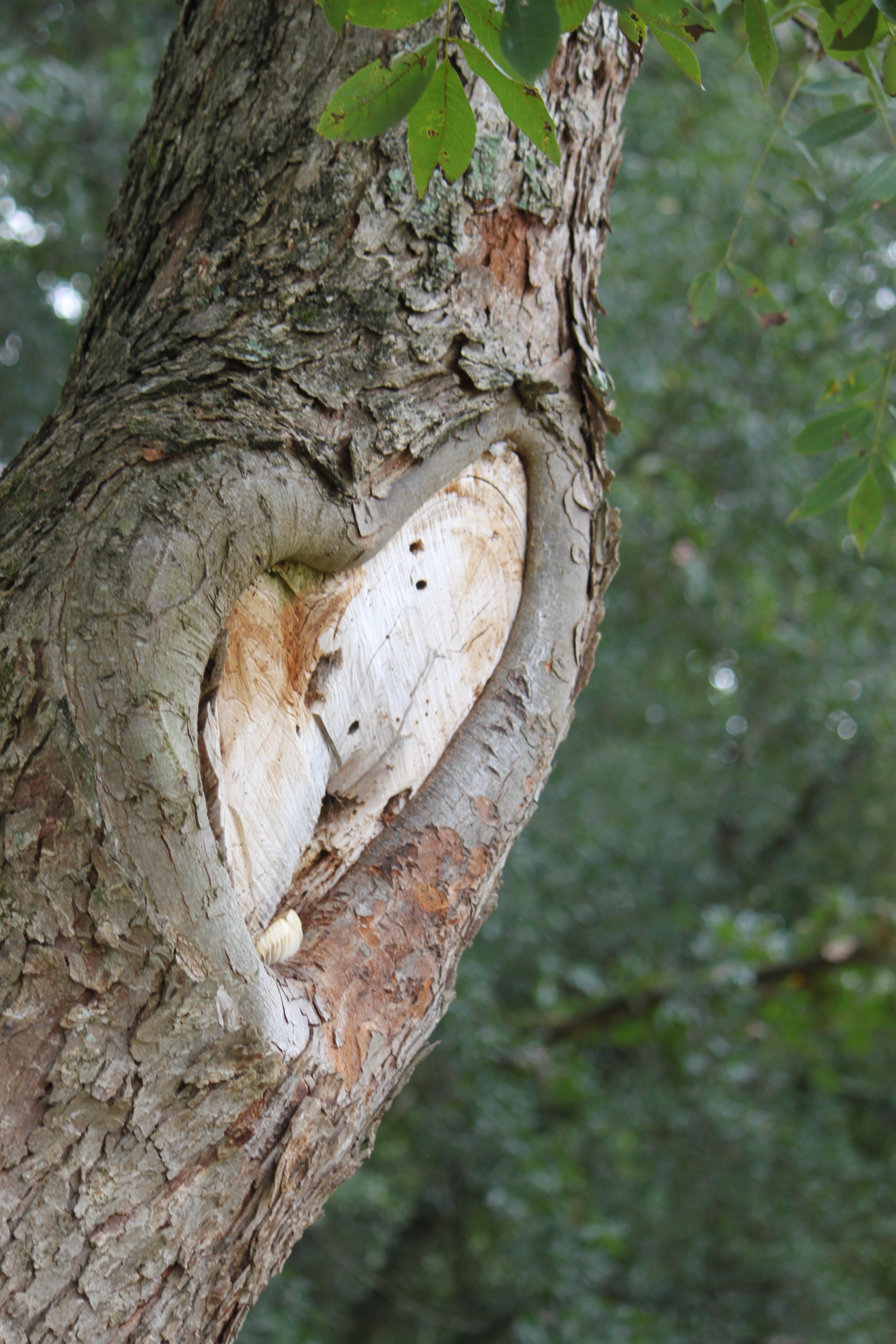
Healed


 Lost Corner Letters
Leave a comment