

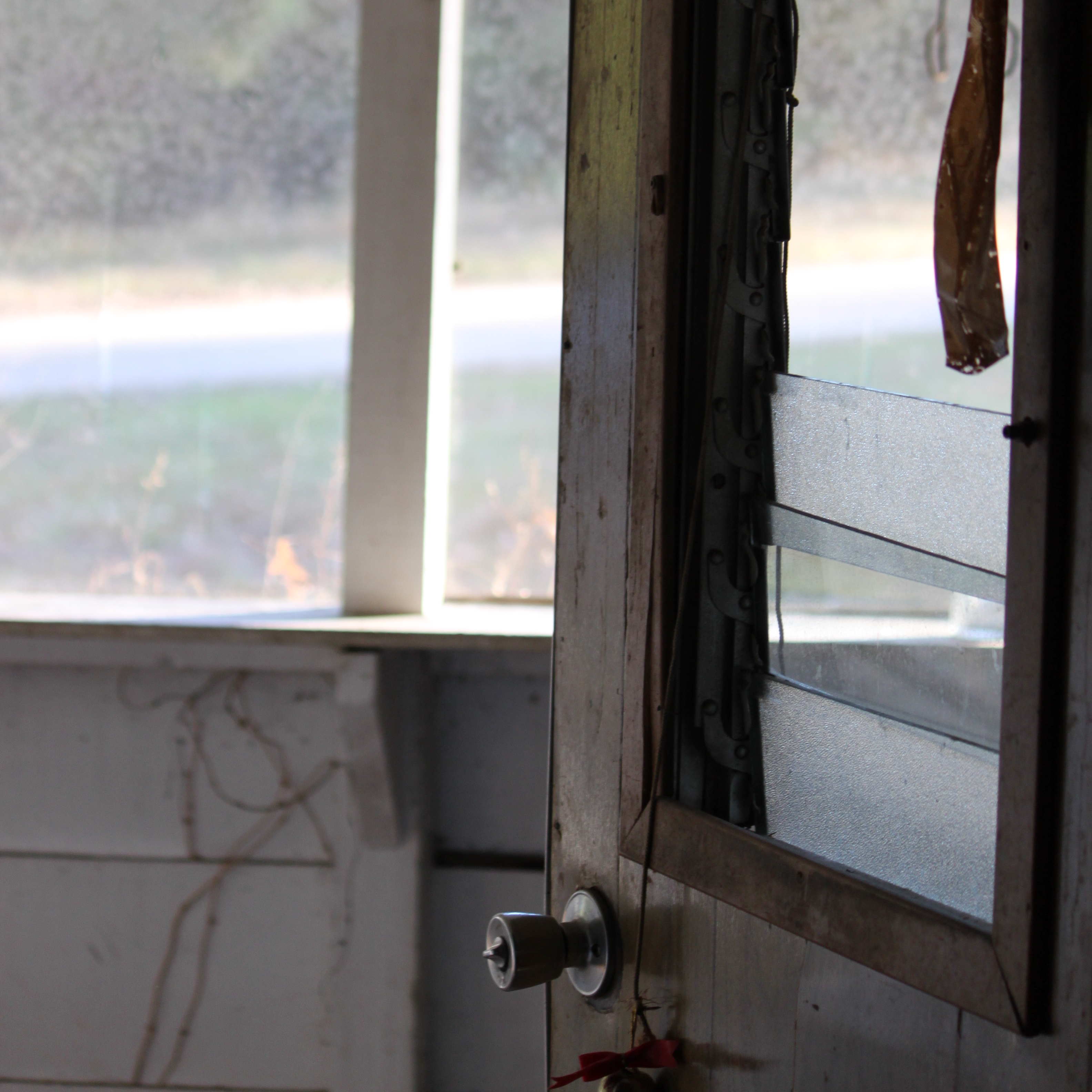
Memory floods like the whiff of ignition of the gas-powered stove, ushered in through the predictable swat of a screen door against its white frame.
Three concrete steps lead to a gray-washed back porch. The aroma of fried chicken, grease and room-temperature sweet tea swirls, even before the rush of air from the back door into the kitchen.
Seated stoic yet slightly eager, our matriarch holds court at on the left side of the dining table where she soothes her deepest unspoken thoughts. She attends this watchtower every day, scanning the road from a distance for signs of approaching company in the form of a rising dust cloud. Maybe someone will stop.
Then the greeting. “Hey, Mitz-i {…Gar-y, Rick-y, Sheil-a, Bet-sy, Lar-ry, Ha-zel, Ed-na…}. Have you eaten? Have some chicken, and a drink.”
A faint smile emerges with the slightest twinkling of blue, almond-shaped eyes. Her finger curls of dark hair match the lilt at the end of her words.
She stands to meet us whether or not she can walk, the pain of worn knees and hips is worn into subtle grooves above her brow. She struggles to hide it, to give us her best effort in spite of it.
Much of life since then has been a struggle.
With nine kids, seven still at home, her only love left on a return bus to Norfolk for steady income. He came home in a box. An unknowing driver put him out to die alongside a rural Virginia roadway, suspecting his bleeding brain for drunken folly. The most honest man in Lowe’s Grove met an undeserved and undignified ending. He lasted a few days, but it was superficial at best; he didn’t know she was there. If he did, he didn’t show it. Like many things in her life, it remained an open question.
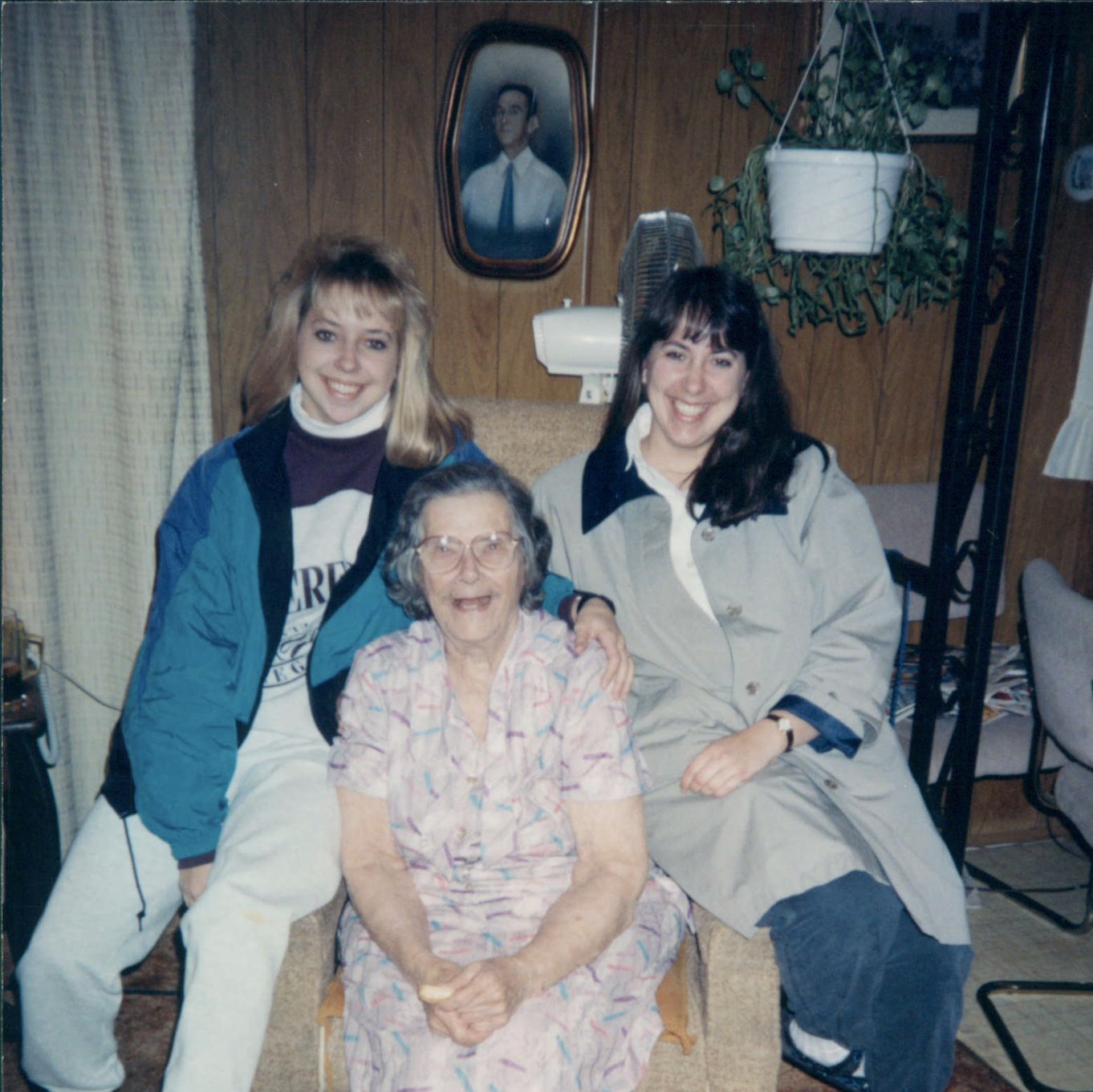
His pastel-tinted portrait hangs on the paneled wall between her dining chair and the front room window, its position behind her perch suited for whispering in his love’s ear, “It’s okay, Naner – it’s going to be alright. Give my love to Douglas and the rest. Tell them to continue bringing good reports, in school and in every way.”
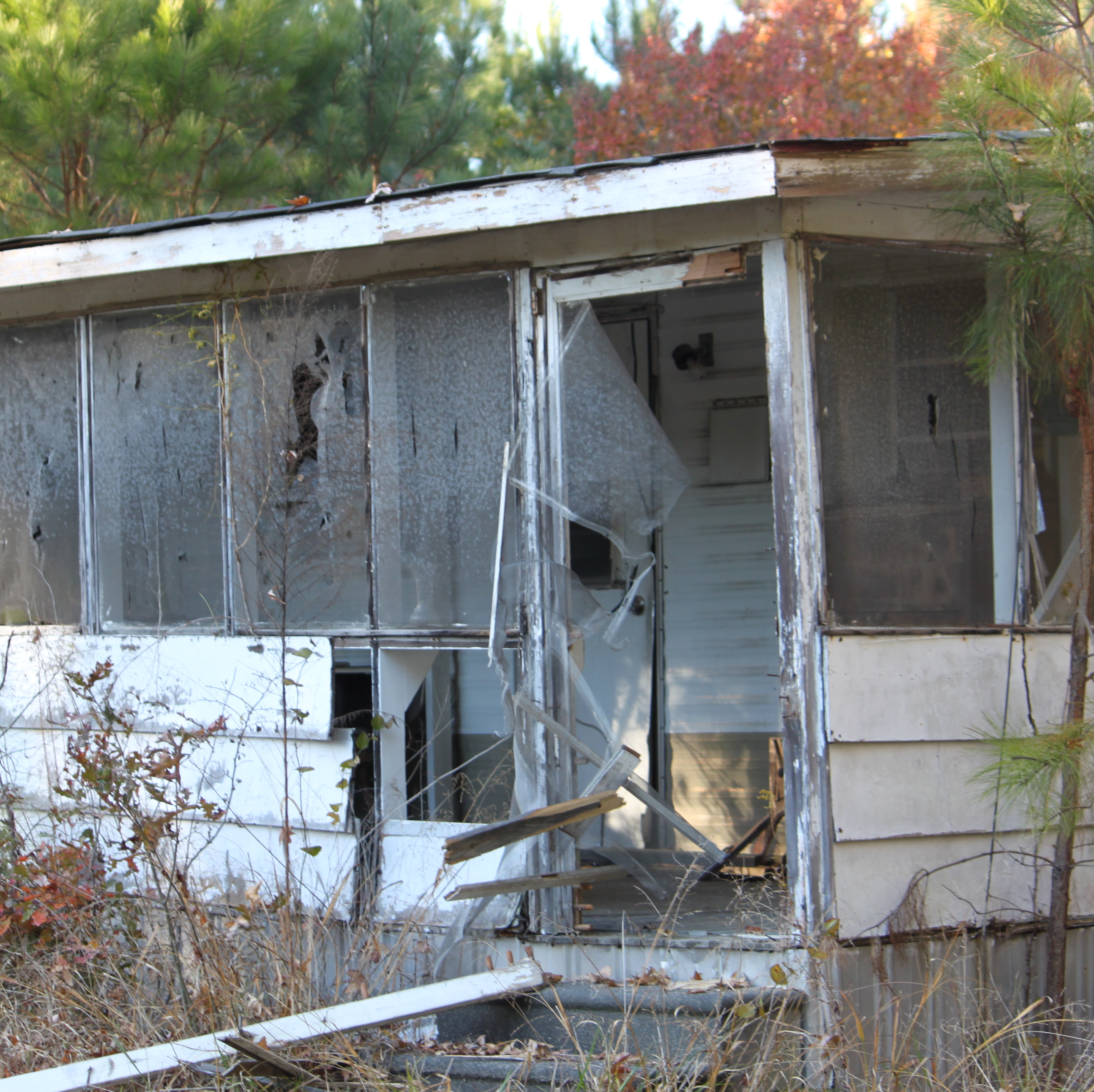
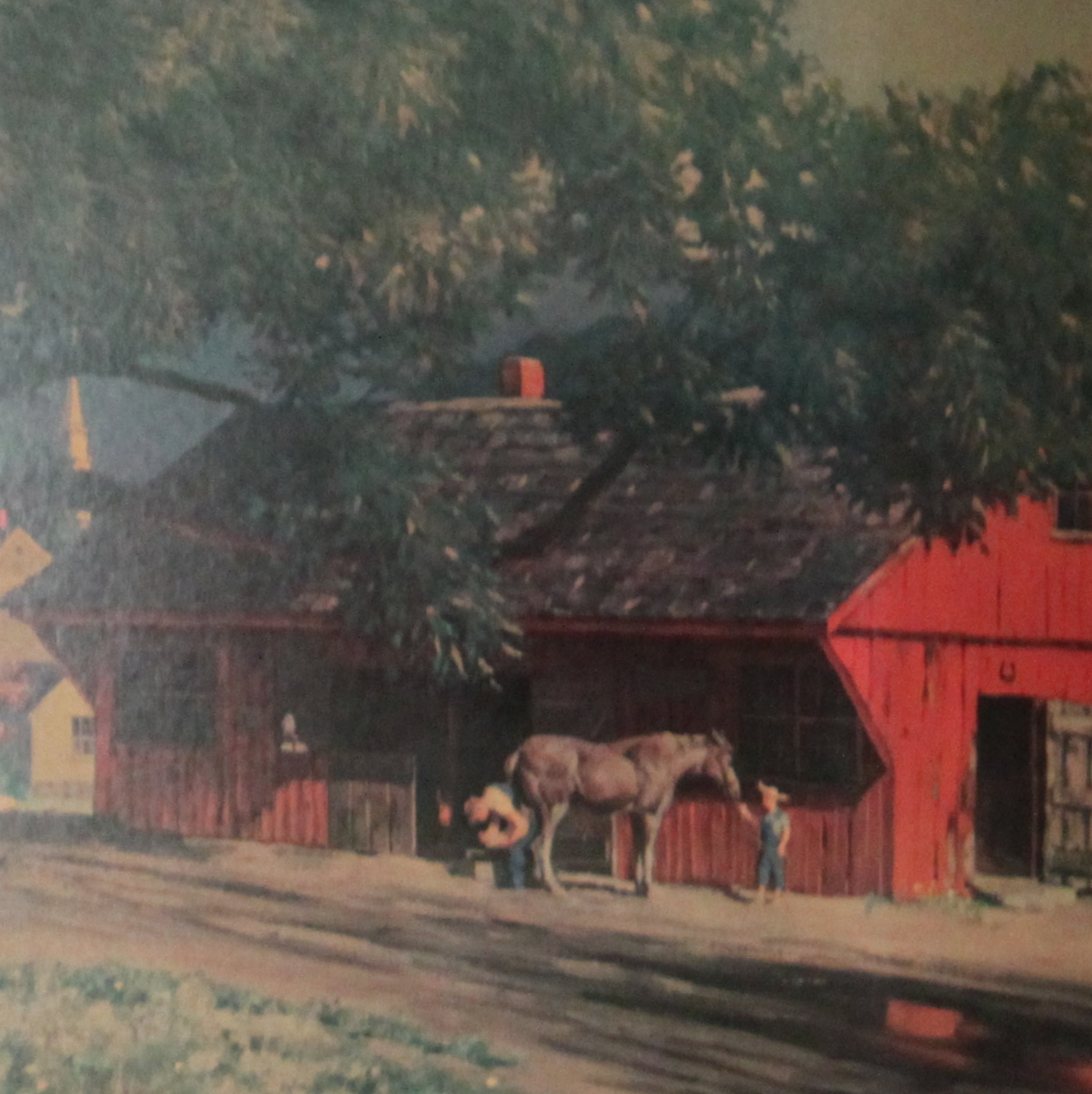
The warm glow of incandescent lighting fills the corners of the living room. A console television anchors the space underneath a rural scene-scape painting screwed to the trailer wall. I remember a barn, a horse and a child in a straw hat. Somehow this decoration always made sense.
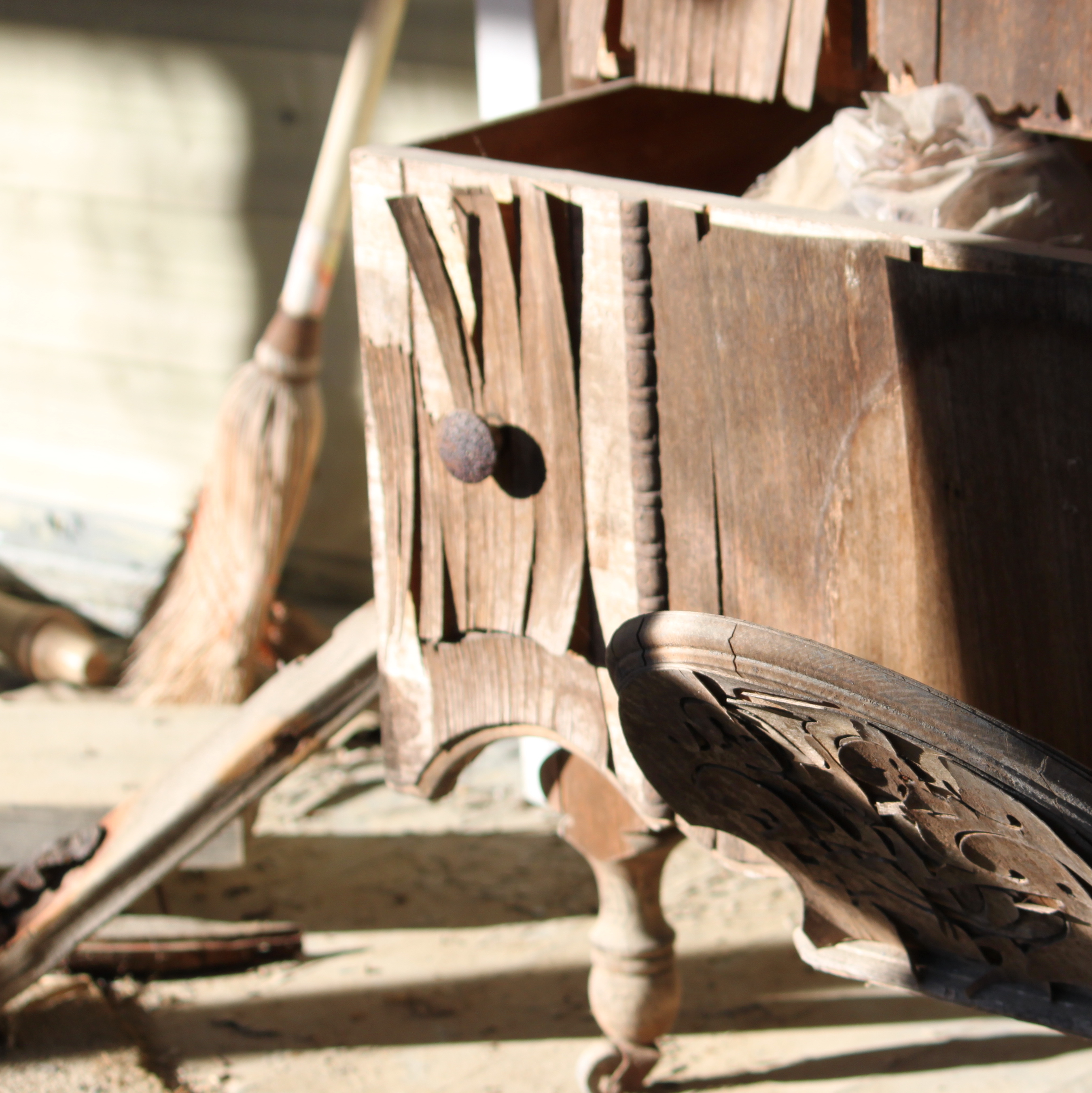
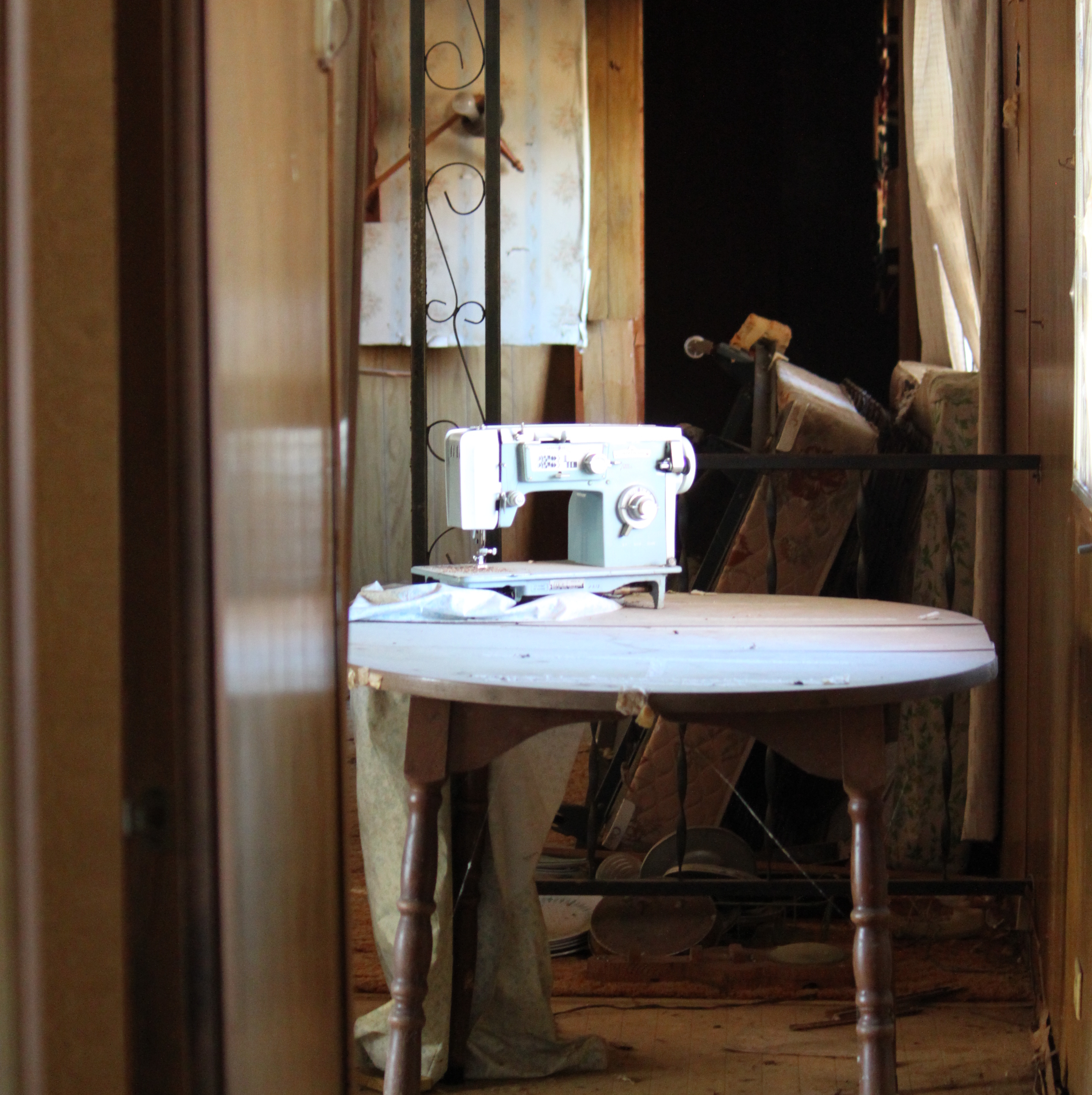
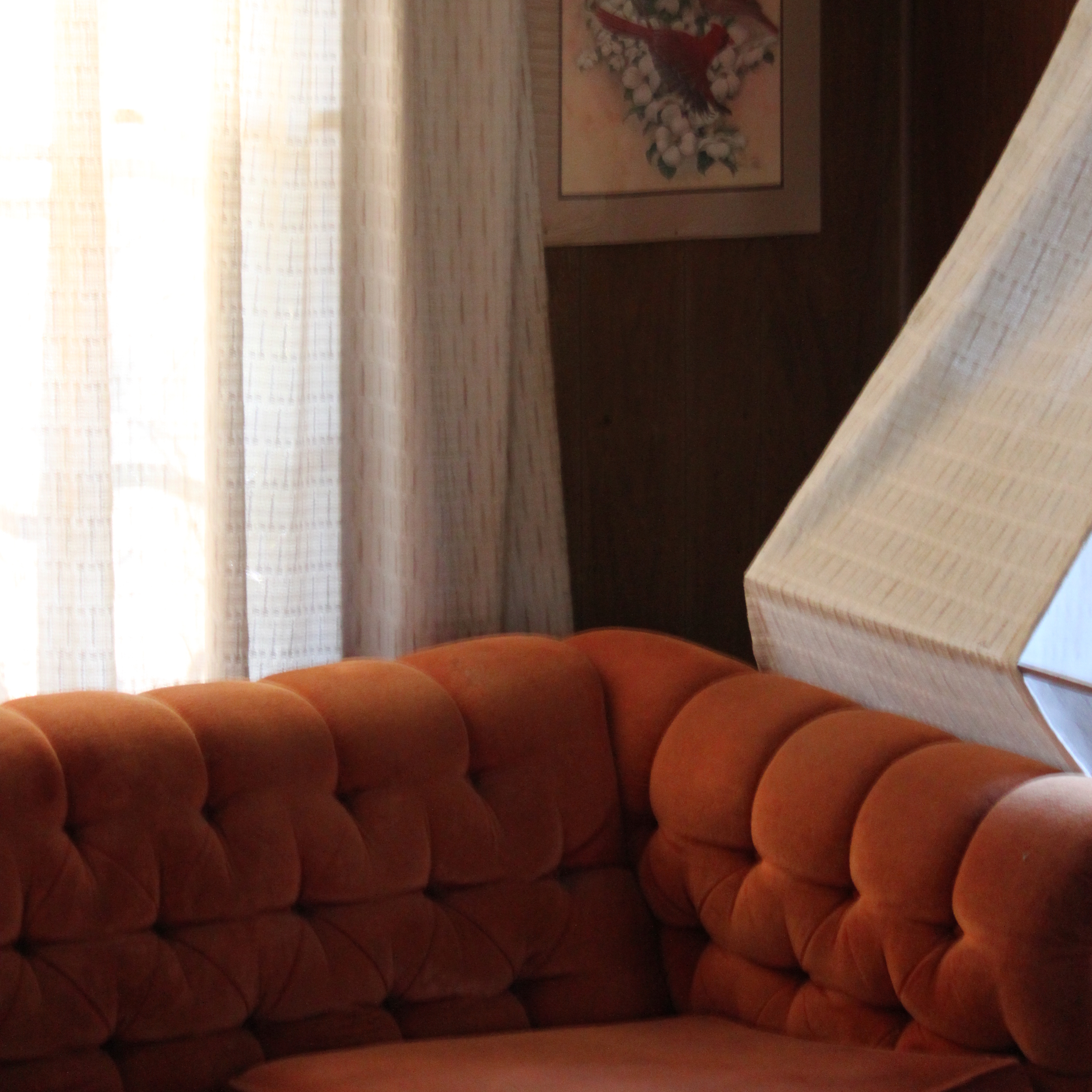
The room’s furnishings are adequate and easy – a burnt-orange velour sofa, a chair opposite the television for her special Douglas, a side piece or two and a game table next to her chair wearing the distinct ring of an errant iced tea glass.
Women’s magazines are stacked on the table’s lower shelf under the front window, along with a couple days’ newspapers. There was a time this simple farmer entered crossword-puzzle contests from the Durham paper, occasionally winning much-needed cash. She was a woman of humble surprises.
A thousand people have written the sentence that begins, “Home is where…”
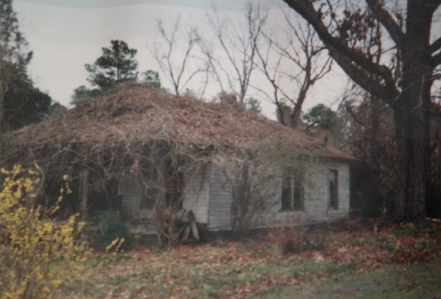
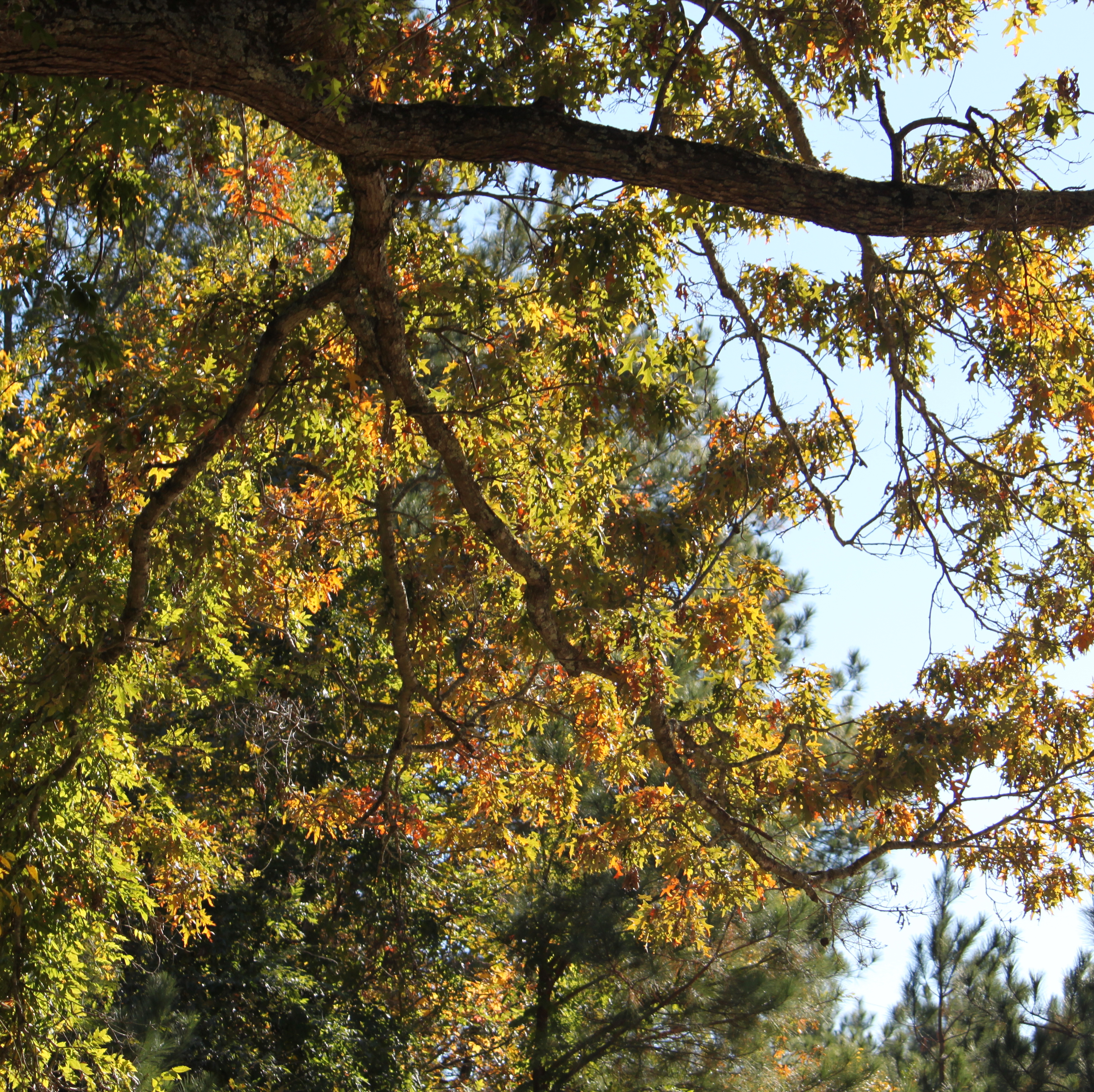
My heart’s home is a single-wide trailer in the northeast corner of Chatham County, a place called the Lost Corner. It still rests on block moorings under the shade of a large oak tree, just yards from the site of a washed-out, simple wood-frame house that raised nine children, where laughter and simple pleasures once echoed between a good and decent couple in love.
~~~
I loved nothing more than my grandmother – not any school friend or pastime, not drawing, piano or bicycles. She was It.
In a large farm family, there are many cousins and a wide age span. I envied my older cousins born to a different era. My sister and I were the bend in that era, close enough to know of it yet cut of different cloth.
They called her ‘Mama’ or ‘Grandma’ Blalock. We called her ‘Heidi,’ a toddler’s misunderstanding of her simple greeting. “Hei-di, Mitz-i.” I thought it was her name.
The nickname was not all that separated me from my more legitimate cousins. They knew the farming neighbors and the community history. They attended the family church. They did tours of duty in the tobacco fields and generally worked harder than I ever will. They had a foothold in Heidi’s inner life I could never attain. They were established adults when I was still a child, and they supported her financially and helped her on the farm while I sat inside and ate Big 60 creme cookies from the Winn-Dixie on 55. She practically raised some of them. I knew her from a distance – about three miles down our little dirt road. Some of my kin who were much more lucky lived right there in her shadow. Though I saw her or talked by telephone regularly, there was always an inferiority to our connection. I was some kind of imposter she let in. I ate fried chicken with a knife and fork. She loved me, but I was simply not the same.
This did not stop my big sister and me from begging visits.
Heidi and our Uncle Doug entertained us with evening games of checkers. She had no mercy on her granddaughters and calmly walloped us. We shelled butter beans and peas from the garden while watching “Hee-Haw” and “The Waltons.” We suffered through Lawrence Welk and sometimes upon hearing the theme music made our exit to sneak into the nearly fallen Old House next door where we pondered the glory days when hippies rented the small home.
Heidi was simple. I don’t mean that in any negative way. A thinker, she was deep. But she said not one word more than she needed to say. If a neighbor or relative brought gossip into her home, the most she might offer is, “I don’t know about all that,” with a disapproving nod.
By the time I aged enough to be of any use to her, she was no longer farming and was barely gardening. My contribution to her welfare and Doug’s were occasional trips to Winn-Dixie for Coke, Diet Coke, bologna and the like. Brenda shrink-wrapped her screened porch for the winter and laid a new linoleum floor. Larry plowed the garden and repaired the roof. I bought Coke products for which she never let me pay, and we all knew she didn’t have the money.
The truth is I would have given up my allowance and babysitting money forever to know Heidi could live with one less worry, even for just a moment.
~~~
Leaving for college was hard for me. I had to leave Heidi.
It was the pre-mobile era of AT&T calling cards, and I had my parents’ pin number. It was 5612 and funded many calls to Heidi. I don’t recall ever being in trouble for the habit. How can you scold a child for calling her grandmother?
Heidi did her part to keep Ma Bell in business. About twice a month she rang the phone at the end of my freshman-year hall. “Mitzi, it’s your grandmother again!” someone would yell. Other times I returned to the dorm to find a note taped to my door: Heidi, 544-2368. I felt so special.
When I graduated and moved to Southwest Georgia, she remained faithful. I lived in volunteer housing with Habitat for Humanity and shared my home with other young women from around the world. We hailed from two African nations, Germany and various U.S. states. When our house phone rang, especially on weekends, we scrambled to answer.
“Allo?” the Africans answered.
“Hallo,” Simone said.
Heidi’s shy question was always the same, whatever the language or accent that answered. “Mitz-i?”
“Mitzi! It’s your grandmother again!”
~~~
I moved back to North Carolina two years later. She was excited, but I was still three hours from home. Our visits were bitter-sweet.
“Mitzi, reckon you could get a job here like what you do there so me and Doug could see you more?” Her oft-repeated question showed a new dependence and vulnerability.
Her calls became more frequent with age, as family married and life multiplied their distractions. Her emotional needs grew.
A few times in her last years she surprised me with jokes, pretending (poorly) to be a man when she called, unaware of the new caller-ID feature on many phones.
“Mitzi,” she said in a feigned gruff voice.
“Yes, Heidi?” I answered.
“Maybe it’s a man,” she countered.
“Maybe,” I answered, “or some crazy Chatham County tobacco farmer.” She laughed openly, perhaps for the first time in my life.
Once she called to share she had mis-dialed my number and had reached “some man” in Hickory. “It ain’t no Mitzi here,” he told her.
She called him time and again, making the same ‘mistake.’ He, too, was widowed and alone. Her telling of the story was always the same. “I dialed 170-4-3…naw that ain’t it. I called 1-70-432-8-176-8. Some old man answered and I said, ‘Mitz-i?’ and he said, ‘It ain’t no Mitzi here,’ and then we talked a while. He says it’s nice out there.”
In those years I finally cracked her reserve and received an answer to my broken-record, “I love you.” “I do you, too,” she offered self-consciously. Not “I love you” as she learned early on how impossible it is to hold love for someone only to have that person slip away. If you don’t say the words, you can never again feel that breath-taking loss. She loved us equally and freely in her almsgiving of food and small deeds, but she guarded closely the words.
I visited some weekends. It was hard to say hello and goodbye more frequently. I often cried when leaving her house, my last stop before the interstate, for fear the visit would be our last.
That day came in 1995. My mother called. We agreed I would call my older sister and Mom would call the baby.
Once again, I used the family calling card. I stood in line in the rain for my turn at a pay phone at a rest area off I-40 near Statesville. A young woman dominated the telephone. I shared my plight with a woman in line near me. She moved me to the front of the line and encouraged the talker to hang up.
Through tears and half-spoken fragments I tried to tell my big sister, only I couldn’t say the words.
“Mom says if we want to see her again, we have to go now. We have to leave now.” It led to a misunderstanding and more tears as I stood in the rain without an umbrella. I didn’t take time to grab it for fear of missing her passing.
My new friend in line at the pay phone cried sympathetically, and an old man stopped to listen in. He shook his head in solemn agreement as if to say, “Not again.” He had clearly stood in my soggy shoes before.
I made it to the hospital through pouring rain and traffic delays, joining a whole room full of cousins and aunts who were having their worst day ever. None was as devastated as our Doug, her number-one son and 53-year companion. He had a very, very bad day.
Stroking her hand in repetition he said, “Mommy Darling Girl is going to get better, and I’m going to take you home and take care of you. I will cook bologna sandwiches for you and clean, I will. You’re going to get better, Mommy Girl.”
It didn’t happen. My in-crowd older cousins, two good men in the lineage of our grandfather, drove him home that night. He collapsed in the yard and had to be carried inside to spend his first-ever night alone, without Mama.
None of us appreciated the weight of that night on Doug, or if we did, we couldn’t absorb it. Soon he, too, would be gone, grieved into insanity and then death by the incomprehensible loss.
~~~
I think of her so often. I think about her silences, the pain she held close and never gave words. I think about her insistence on naming each grandchild when saying she loved me. “I do you, too…and Sheila and Karen and Becky and Brenda and…and…and all of them.” I think about her generosity in sharing what must have always been her last dollar bill with the grandchild in her presence. I think about the cookie jar by the back door and the fried chicken she kept ready and waiting for company, as though to encourage us to stop as we passed on the dirt road. I think about her sitting quietly, hands folded in her lap and ever so slightly rocking in her straight-back chair as she considered the day’s unspoken thoughts and memories. I think of a sepia-tone photo my mother recently shared. Heidi is seated alone on the back porch of the Old House with a basin of something she is shelling on her lap. She is about the age I am now, recently widowed with seven kids under roof and a farm to run. Resting her chin on one hand, she gazes beyond the garden to the tobacco fields in classic Naner reserve as if to say, “How will I ever do it?” She didn’t give words to the pain, but it is evident in the photo – glaringly, tragically evident.
Mostly, I think of her homes, a modest single-wide mobile home and the adjacent Old House of legend. If a home is built with love, if it offers belonging without question, Heidi’s home was and is still, if only in our hearts, a castle made of the finest stone that always has a light on.
Come see us.
Have some chicken.
Do you have to go already?
~~~
That is all the value of home, having deep roots in something of substance, something that lasts and that carries you whether you are weak or strong, sure or in doubt.
The cost of home is something else.
I learned this week the largest primary residence in America is 90,000 square feet and cost $100 million. Let me spell that out: 100,000,000 American dollars.
I figure Heidi’s trailer to be about 600 square feet. If that’s right, it fits into this palace 150 times. The cost comparison is more astounding. The 1968 New Moon model mobile home cost $3,000 or $4,000 in its day. Somewhere I have a copy of the paperwork.
In today’s market a new low-end trailer fetches $45,000 or so. For the cost of America’s most expensive home, one can purchase 2222.22 single-wide trailers. If each hosts an “average” family of four, 8889 people can be housed for the cost of one single-family palace that desires only to be the biggest, to hold the record.
I wonder what Naner Sherron Blalock would say? I do wonder. Most likely, “Unhh,” with a short, thoughtful shake of her head, followed by a long silence behind thinking, blinking blue eyes.
When the shock wore off, if it did, she might say something like, “Ain’t that something?” True to her, it would be more question and less judgment.
Still loyal to my grandmother, I waive the judgment. The fact is The Largest Home is a testament to the state of our nation more than the story of one very out-of-step family. Many of us envy the opulence even if we don’t admit it. Just an ounce of it would hold us quite nicely.
I know a pastor who says many people are homeless for having too much house. Millard Fuller, the founder of Habitat for Humanity shared the belief. By filling our internal holes with external things, we actually increase our inner emptiness. The more we add, the louder our souls echo. It is black hole of the soul.
Through my involvement with Habitat over two decades, I have toyed with two seemingly opposing sentiments.
The first is that people who lack material things often have stronger bases, stronger foundations, than those who live with relative ease. They have more or better character. They take nothing for granted. They tend to be more generous. Their understanding of others’ struggles is organic while many of us have to try to “get it.” In this way I make heroes of people with economic woes.
At the same time, I bet I have written 200 letters, case statements and grant proposals asserting that lacking a safe, decent home robs a person, especially a child, of self-worth, of hope for the future. Kids who don’t know what is possible are less likely to imagine life any other way. Housing intervention is life-changing in that it establishes self-esteem and pride. This belief suggests pride would otherwise be absent. In this way I pity people, or worse, condescend to people whose birthright is not as lucky as my own.
In teasing it out I return to my mother’s family. If one thing is true for the siblings, it is that Papa Blalock’s untimely death and the family’s subsequent increase in economic despair is the single most influential factor in their lives, hands down.
The values and ethos of work, saving, spending and money hold very specific meanings for them. Each has handled it his or her own way, but none can argue they were not permanently altered by the experience of flour-sack dresses and one prized pair of hand-me-down shoes per year at best.
My mother went to nursing school in Durham and shared an apartment with a friend. She had a stipend that covered two meals a day, and she and her roommate walked to a drug store every night for a pack of crackers to hold them over until the next solid meal. My mother still keeps a pack of crackers on hand in her purse and her car, just in case. While in school she also worked, and she gave every penny she could to her mother who so desperately needed it. Mom’s brothers and sisters did the same as they were able. No one got out untouched by very real sacrifice.
When I was growing up and complained about being hungry, my mother sometimes encouraged me to have a cracker. “How can she consider that a meal?” I thought. It wasn’t until last week that she shared the dinner routine of her nursing-school years. I can’t ever see her or crackers in the same demeaning way again. I have absolutely no idea what it is to sacrifice or to suffer.
So is my grandmother’s family stronger and better secured internally than some others who have faced less hardship? In ways, yes.
Did her children’s self-esteem take a hit, and would they have been better served for the future had their lives been just a little easier? Again, yes.
Like most things in life, the truth is a mix. Truth is seldom black and white, or simple. It is loaded with paradox and comes in many shades of gray.
~~~
The permanence of home may be its defining characteristic.
In a journal five years ago, I wrote:
This is what I’ve learned…HOME IS INSIDE. It is something we take with us from place to place.
What I didn’t spell out in 2007 is that this place inside is an unearned gift. It is built by generations of kin, their values, their shared experiences and love. It is a collective autobiography that continues to add new chapters. In it we are never alone or without guidance. Home is always within us.
My last 12 months have been hard. I can’t say they are my hardest yet, but they rank.
Several times I found myself eating lunch in my car at the cemetery at Lowe’s Grove. This is how I share a meal now with my grandmother, only I forgo the fried chicken for salad with unsweet tea.
The practice began years ago. It is not common, but it is what I do and where I go when I need to sit with a thought, a memory or a hard truth and simply take it in, without giving words to the pain. It is one great-big family reunion with my favorite relatives and a chance to share reflective silence.
Home is inside, and a person in any life circumstance can tap into it, even at the local church cemetery.
~~~
It is my love and devotion for my grandmother that made me sensitive to people with economic need. Our family folklore is littered with stories – legends – of homes, houses and home-full-ness amid real poverty of form.
Because of the deep hardships of some of my favorite relatives, most especially Heidi, I committed myself to a non-profit career with a focus on housing.
She helped launch this thing that has meant everything to me. It is fitting then that I return home to the symbolic seat across her dining table as I negotiate my own new direction just as she did in 1951 after receiving impossible news from a Norfolk hospital. She is bookends to this part of my story, stones for my permanent foundation, assurance both coming and going. I can only hope she had her own touchstones, whether her mother or her own dear grandmother, aptly named Granny House.
Like Heidi, I find myself sitting by her front-room table, gazing out my window and wondering what is next. What direction will I take? Will I have enough? Will anyone remember I’m here?
I do not wonder what she would say. It would be an utterance at best. But love would sparkle in her slanted blue eyes as she blinked the message, “I’m proud of you, Mitz-i. I do you, too.”
I wonder about my grandfather, though. He was easy-going, slight of stature and wise. He wore round, wire-rimmed spectacles. He carried goodness and patience as easily as most men wear a watch. He died 17 years before my birth, and I sometimes speculate about him.
What I do know for sure is he always did the right thing, and he spoke for himself sparingly but when necessary. Once there was a right-of-way issue on the farm with a man who could afford a better lawyer. The man claimed the family home made his adjacent property inaccessible and needed to be razed. Papa Blalock was not about to lose the home he built to a deceitful man’s greed. He gathered the men of the community, nearby farmers and church members. They brought together their resources and in the dark of night, they used horses, mules and logs to roll the small, barely adequate structure to the other side of the road-front property where they rebuilt the rock foundation and once again set the family home firmly in place.
Papa Blalock was honest, but he didn’t roll over for a beating or public shaming. He quietly and rightly acted in his own interest and that of his beloved family, a new lesson I am trying to learn.
I see him in the spirits of my male cousins who will do anything to help a friend or stranger. I see Heidi in my aunts and older cousins and in my own mother’s manner of silent reflection and personal processing of her deepest feelings. I find myself in Heidi’s home when I see her cookie jar in my kitchen or buttercups blooming in spring. I see her in myself as I write at her table, my new desk and thinking space, an invaluable gift from my mother.
From this table I think also of a family in Florida driven to inhabit 90,000 square feet – an investment that if spent differently could house roughly 9,000 people. How big is the inner void that demands that loud a house? Is there someone on staff to keep the chicken and potatoes warmed for the owners’ homecoming each day? Is there a family ethic or legend to identify and give them pride apart from the physical structure?
Life is hard sometimes. Like a thief in the night, it will rob you of security and possessions, your peace of mind. It will entice you to believe the stuff of the earth holds more than fleeting worth.
The things our world cannot steal, the things that will last, are your integrity, your purpose and, for me, a richly woven inner tapestry that values a worn-down old place in Chatham County as highly as the biggest, finest American home.
All the money in the world cannot buy the safety and certainty of a small farmhouse with no running water or heat. Even $100 million comes up short against a 1968 New Moon model mobile home in a tucked-away corner where “Hee-Haw” and “The Waltons” are on permanent re-run amid the wafting aroma of fried chicken, boiled potatoes and sweet tea.
I am forever grateful that wherever I find myself and whatever the situation, I will always be at home.
© Mitzi Viola, 7/19/12
~~~
The Old House, 1988
~~~
Heidi’s trailer, 2011
~~~
Papa Blalock, Karen, Heidi and me, 1992
~~~
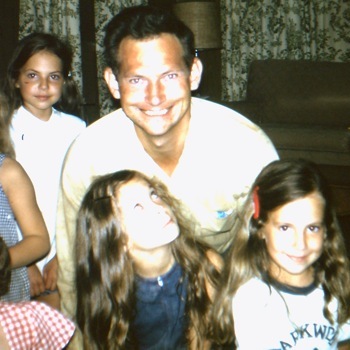
Sheila, Doug, Julie and me, 1974
~~~
“Home is a name, a word, it is a strong one; stronger than magician ever spoke, or spirit ever answered to, in the strongest conjuration.”
~Charles Dickens


 Lost Corner Letters
Leave a reply to Laura (High) Drowns Cancel reply