
 This post was written in April after the Boston Marathon bombing.
It is offered today in honor of a girl who looked evil in the eye armed only with the weapon of truth.
It is also a tribute to her classmates, including two who were injured during the attempted assassination, and for girls and people everywhere who endure corrupt power, cruelty and violence with hope and indomitable human spirit.
~~~
Today I am from Boston.
I wear a Red Sox cap and sport a foreign accent. While we may be strangers, these are my brothers and sisters. Martin Richard might as well be my own child. He is. We are one people, after all.
I am proud to be from Boston.
At the same time, I don jeans and my best cowgirl hat, a nod to my distant kin in a town called West that did not one single thing to deserve the week its good people had.
I am also proud to be from Texas.
We all remember our pride in being New Yorkers and Americans a dozen years ago. We mourned, rallied and rose again after the towers fell. They were ours, after all. Our communal blood is red, white and blue, and mine is no different.
We were not defeated that day, or any day after, because we stood together in the face of terror. We triumphed through the simple act of loving one another and getting out of bed with courage the next day, and the next.
I am forever proud to be from New York.
Equally resolute I have flown the flag of Joplin, MO, where a monstrous tornado wiped out the entire town, but not its resolve.
Similarly, I claim New Orleans along with Long Island and many nearby communities where the water just kept coming and coming. Like all Americans, I panicked at the thought of the choices some had to make. We suffered in sympathy and scrambled to help in tangible ways. Though we speak different dialects and know different cultures, we are family.
It’s quite easy to relate to our brothers and sisters when we share so much – a language, a continent, a way of life.
When my family hurts, I, too, hurt. When my family triumphs, we all win. Good wins.
We stand or fall together.
~~~
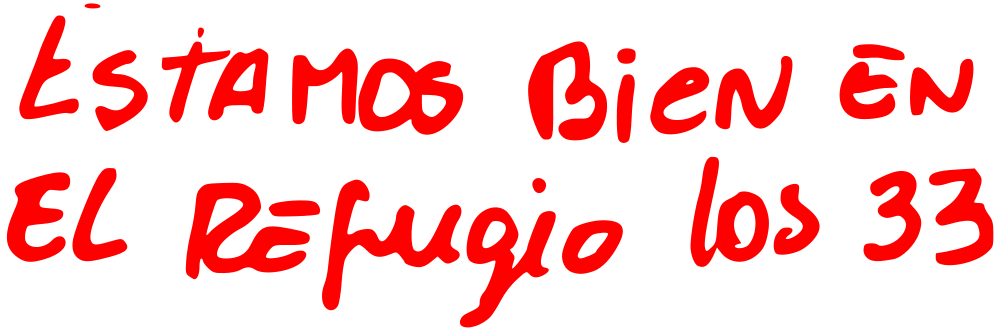
I once taped to my office door the flag of the nation of Chile.
For 69 days in 2010, the world awaited daily word that 33 miners – living beings with families and hopes, trapped underground and inaccessible – were still alive.
The October day the men were finally pulled to the surface by the strength of machinery and human ingenuity, I wept.
All day I sat at work tuned in via Internet. Much to my colleagues’ dismay, I never turned down the noise, not wanting to miss the moment each man rose triumphant from utter darkness a half mile below the earth.
“We will never see this again,” I pleaded. “Stop working, come listen. We won’t see this miracle again in our lifetime.”
In spite of the fact that I was the work supervisor and they the direct reports, each continued about her business of earning a living with little concern for the news of the day.
Plenty I know were interested, but I couldn’t help but believe that if the mine were in West Virginia or Kentucky, our interest might show three dimensions.
If nothing else, we might have bothered to stop work to celebrate 33 impossible miracles celebrated in one single day. Impossible, yet real.
~~~
Last November we prepared for Super Tuesday, our political landscape heavy with fear.
Good people on both side of the aisle stood to lose or gain, depending on how it went down. Freedoms were at stake – guns, abortion, voting rights and more.
One month prior, a young girl in Pakistan had the nerve to speak her truth – that girls deserve education as much as boys, that education is a right. For the power of these words and the following she unwittingly generated, she was shot in the face and neck when the truck in which she was riding was ambushed one October morning.
As is so often the case, simple words of truth invite assassination. Only this time it didn’t work.
Good wins.
~~~
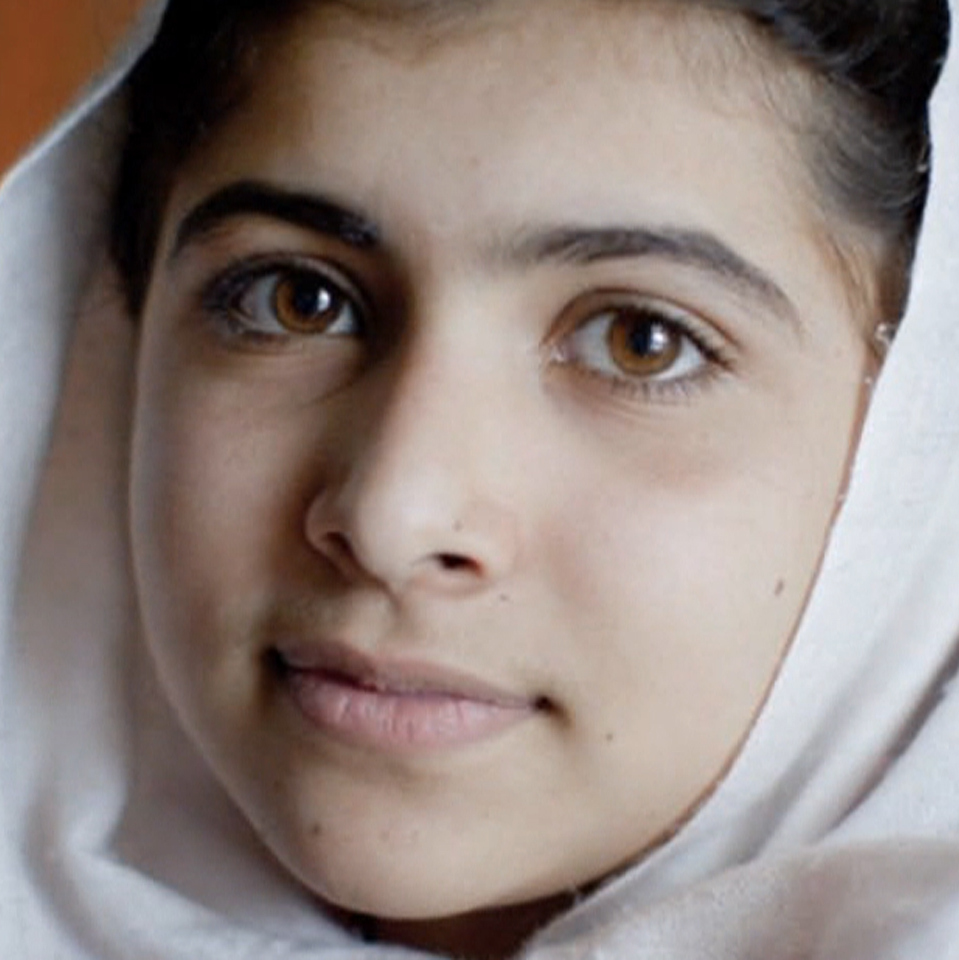
Malala makes me proud to be from the Swat Valley and to wear a hijab.
She also calls out my own mistakes and shortsightedness.
Last November I was on fire about her story and its juxtaposition to our own Presidential election.
We Americans had lost our perspective on who and what is really at risk. All freedoms are not the same. Some carry more tangible, immediate risk.
My commentary over and over when talking with people or writing: Can your child be shot in the face for the simple act of going to school? If not, stop complaining about the election. The sky isn’t falling. The political world rolls in waves of correction, left and right. Whatever happens, it will roll back again. That’s how it works.
Five weeks later 20 American children and 6 adults were shot execution style, nearly all gunned down while looking the shooter in the eye, for the simple act of going to school.
Suddenly our national gun-control debate felt different. Our rights and even our own lives right here at home were in fact at risk.
Which right exactly is presented differently by the two sides. My mistake was in diminishing literal danger.
~~~
I love Malala as I love unlikely heroes in general. For weeks I kept up with her progress, sharing notes with progressive Facebook friends.
That’s my self-righteous up-front defense against this next nugget.
As the news of Sandy Hook filled our airwaves, I ached at the thought of the surviving children. How will they ever make it? How can they return to school? How will they escape the two-headed demon of survivors’ guilt and a lifetime of flashback trauma?
Here’s the admission. I previously thought about the surviving girls who shared Malala’s ride to school, yet I didn’t feel it – not in the same way.
I understood the Pakistani girls’ situation, but my understanding lacked an empathy that allowed me to place myself or a girl I know in the same position – perhaps in the very same truck. My sorrow lacked depth.
It would never have occurred to me if I had not had the experience of absorbing the pain of the surviving children in Connecticut.
They are all my distant kin who speak with foreign accents and who share my hopes and dreams.
Maybe.
~~~
I don’t believe guilt is an appropriate response.
Psychologists tell us if we look at photos of people of our race, we are more likely to identify them as separate, distinct individuals than if the pictures are of people of a different race.
I’ll put it simply. I’m a White girl from the South. If I see photos of, say, {fill in the blank} people, I’m more likely to say they all sort of look alike than if I see images of my own kind. In people with whom I have more experience, I see more distinctness of humanity, unique individuality.
This is true of people of all races. Somewhere between brain functioning and social structure, we absorb unknown differentiation.
There’s nothing to judge here. It is brain science and fact.
~~~
It’s only natural this might impact the depth of our feelings, our empathy, toward other people – those who look the same as well as those who look different.
When you factor in our values and unique life experiences, we are each uniquely structured to relate to other people in a way no one else can.
The same can be said of people who live halfway across the globe. They, too, feel a connection to us that is influenced by these same factors.
We are the same in this regard.
~~~
Having established our similarity, I would like to challenge my assertion we flawed humans see one another in more or less similar ways.
I offer two simple comparisons, one of natural disasters and one of man-made terror.
The Pacific coast of Indonesia and Southern Louisiana.
Both regions were walloped by walls of unrelenting water. Both regions showed significant destruction, felt hardest by the poorest of the poor. In both cases, the world knew and responded.
Here’s a difference: the majority of Indonesians did not have advance warning of the tsunami waves because the extreme widespread poverty of the region does not allow for bandwidth and basic technology to set up appropriate warning systems. Now imagine the differences in post-event rebound. Trust me, I’m not saying New Orleans or its Ninth Ward had it easy. I’m simply saying there’s a difference.
Malala Yousafzai’s ambush in the town of Mingora in the Swat Valley of Pakistan and the classrooms and hallways of Sandy Hook Elementary School in the village of Sandy Hook in Newtown, Connecticut.
Both places were witness to unspeakable, indefensible violence against the most innocent. The difference is in the power of local authorities to act in response. Sandy Hook, the state of Connecticut and the entire United States wept. Justice responded. Immediately the ongoing debate on gun control flared and has not yet stopped.
Similarly, the Swat Valley and the whole world wept. The tears were for Malala, the other survivors and for the fact that the local police in Mingora cannot stop the insurgent takeover by a well armed band of malicious bullies from the surrounding territory who have bastardized both their religion and culture. No one is safe from terror. It did not start or end with the attempted assassination of a 14-year-old girl. Bastardized power works that way.
Sandy hook was horrible – and nearly impossible for most to imagine.
Now imagine our own police are outgunned by bands of terrorists who ride in from the hills to settle scores at will, policing with their own private set of standards that are set to diminish and silence the human will.
~~~
Freedom and opportunity are the words I keep coming back to.
Not everyone has them in equal measure. It’s simple and obvious, but the importance can’t be overstated.
Terror is terror, yet there’s a very big difference between the horror of Sandy Hook, a rarity no one expected, and knowing upon rising every day this type of mass-murder madness is not only possible but likely – it’s just a matter of where, how and who.
Don’t get me wrong, I’m not saying the murder of innocent school children is okay anywhere. It isn’t. It’s not acceptable to diminish the experience of Sandy Hook for anyone involved. What I am saying is tucked away in the life-taking grotesqueness is the gift of perspective.
The impact of malignant poverty and corruption that much of our world faces each and every day is a reality most Americans will thankfully never know.
Imagine your child speaks for her right to education. In America this would be a source of pride. In other parts of our world, it’s a guarantee there’s a price placed on your daughter’s head. Simple truth invites life-taking hatred that even the police can’t protect against.
The natural world offers equally compelling examples of the differences between our worlds.
What if our country didn’t have ready resources to respond to Sandy or Katrina? How both disasters were handled was ineffective enough. Now imagine there is no ready response at all – or that the scope of misery could have been prevented with bandwidth we cannot afford to develop. What if we had never had the opportunity to know what was coming?
~~~
What struck me in watching news coverage of the Boston bombing in the wake of the execution-style shooting of Malala Yousafzai is not what separates us in this country from the rest of the world.
What’s most important to me is that every human tragedy is a chance for us to relate.
Connection is the real gift amid these situations. I see my distant neighbors and their lives in ways I never saw them before.
Coupled with the gift of awareness is the responsibility to act.
Once I believe Malala could be my own kid, I can no longer hold at a distance her pain or that of her classmates riding in that same ill-fated truck. Their pain is in reality my own. She is my child, after all, and she’s yours, too – just like the kids in a small hamlet in Connecticut. I may choose to deny this reality, but my denial doesn’t make it untrue.
I took the pain of the surviving children from Sandy Hook Elementary School to help me relate to the pain of the girls also injured and terrorized right alongside Malala.
This new-found connection is not cause for blame or guilt; it is a gift.
Now that I know, I am called to live differently. I must act differently, speak differently and even pray differently for my children everywhere who live in fear and suffer pain. My family has grown.
The transformation of connection is powerful, life-giving in a world that sometimes seems otherwise.
I am not one bit happy for a tsunami that killed untold thousands. I also do not diminish the pain of the people of New Orleans. It took one for me to better appreciate the other and to relate to the millions who still suffer. Therein lies the gift.
~~~
I am proud to be from West, from Newtown, from Boston and Lower Manhattan. I am equally proud to be from Indonesia, Chile and other places across this big, beautiful world.
Today, one year after a band of armed bullies tried to kill a school girl for the crime of speaking simple truth, I am proud to hail from the Swat Valley and to wear a hijab.
I stand in awe of one who faced armed bullies and, when asked, replied with the simple phrase, “I am Malala.” This same girl had the courage to forgive rather than choosing the path of hate.
Likewise, I stand in awe of the other girls there that day and for all who triumph through the radical act of getting out of bed with courage the next day, and the next, in spite of the reality that no parent, teacher or police force can contain the rising tide of evil that surrounds them.
I am especially grateful to the brave surviving children and teachers in Newtown for helping me to connect with a more authentic global understanding.
We are all one in the beauty and the pain, and every child is ours.
We stand or fall together.
This is both the gift and the responsibility.


 Lost Corner Letters
Leave a reply to Sylvia LaCour Cancel reply