Never.
My descent into never began in the sterile confines of a neurology office. It was February 1995.
The confident young expert was a recent transplant to our town from sunny Riverside, where he was chief of the department at a nearby hospital. He brimmed with eagerness and the suggestion that whatever ills lurked among the people in this land, he was there to fix them.
There are distant memories of a basic exam – reflexes, muscle strength, pin pricks, walking toe to heel. I remember the clinic feeling confined, like an unexpected one-hour lock-up in county jail. More than anything, the air was muted and gray. It lacked color pigmentation, less a classic black-and-white film and more a reflection of the sudden loss of joy.
The most vivid memory is a full-color scene of a follow-up meeting in his office. Warm lights showcase the varying grains of oak in the presidential desk. Seated directly across from him facing a built-in bookcase of colorful, weighty texts and waxy green plants, I received the report.
“Your labs show elevated ESR. That’s a general inflammatory marker, so it doesn’t tell us much. ANA is negative. Given your symptoms, it warrants follow-up. I’ll see you again in two weeks, and we’ll repeat the labs. The facial numbness and dizziness are a concern. I’m going to work you in for an MRI at Frye. We’ll try our best to make it soon.”
My reply was equally to the point. “That sounds serious. What are you looking for?”
“MS, lupus or a brain tumor,” came the expert reply.
It was at this point I said the words that set into motion the events of the next two decades. I challenged the universe, my immature willfulness and ego in full display.
“I hope it’s the brain tumor because I would rather die than lose my body.”
After a brief pause, we talked details – my best contact number, how to reach him in case of emergency – and I was ushered out of the warm office into my hard new reality.
I drove to the home of my best in-town friend, a single mother with whom I did volunteer work. Sensing bad news, she sent her daughter, whom we called Doodle Bug, into the kitchen to play.
I sat in a wing chair next to her couch, a serious choice for the likes of me, leaning slightly forward in the natural light as if to be closer to my friend, several years my senior and a stand-in sister after my relocation from Georgia. For the first time, this safe home felt cool and strangely suspended in some parallel reality.
My hands shook as I shared the report. For full effect, just in case the universe had not heard me, I repeated the ultimatum.
“I hope it’s the brain tumor because I would rather die than lose my body,” followed this time with low-volume incredulous punctuation, “and I mean it.”
Candace cried. Doodle Bug returned to be sure we were okay. She sat on her mother’s lap as we lied to convince her all was well.
I drove home to my first-floor apartment in a Spanish-style house on Grace Drive overlooking Lake Hickory, a wonderland dotted with white pines, cactus and flower gardens on the south end of the county leading to the northern mountains. It was $270 a month and a respite I didn’t yet know how badly I needed.
Entering the nook, I was first faced with my bicycle, a shiny red Cannondale, my transportation for two years while serving as a volunteer at Habitat for Humanity International headquarters and my partner in crime in the years since. Together we raced tractors and wayward bulls, greeted country dogs, avoided mishaps such as beer bottles thrown from passing trucks.
Two years prior the trusty red steed and I rode 500 miles in one week to the site of the Jimmy Carter Work Project in Winnipeg, the only Southerners on the trip (the steed being from Albany, GA), in it simply for the adventure and the opportunity to raise some money for my favorite cause, a mission I considered my life’s purpose.
It was during that ride that I began to accept that something dark was happening. My joints and tendons were inflamed, and I began to have skin rashes and an overall feeling of malaise. I was #18 and always the last in on our team of 75. By day four, I blew both Achilles tendons and was unable to walk unaided after getting off the bicycle each day. This was in stark contrast to my prideful average speed in the northern foothills, including long passes up the Blue Ridge Parkway, after which I rode downhill leading traffic at 45 or 50 MPH, singing, occasionally with no hands.
I had gained nearly 20 pounds while training and eating the same as always. That 20 would soon become 40. I was too self-conscious to spend time with the other riders. It rained every moment of each day during our excursion, and I lay in my small borrowed tent at night in misery, feeling something was innately wrong with my humanness, not just my health.
The year after, I rode with a team in an event that ended at the swinging bridge atop Grandfather Mountain and began at the Catawba River bridge, visible from my front-porch rocking chair. The next year I dropped off the team before the ride, unable to join a single training ride farther up Grace Chapel Road I had once longed for each weekend.
Home from my neurology appointment with the words MS, lupus and brain tumor still fresh in my consciousness, I curled up on the sofa overlooking Lake Hickory through a screen of white pines and sunlight, bracing myself as the room spun around me and nausea took hold.
The next few years would be a blur.
~~~
Should.
If never is a sophomoric challenge to the powers that be, the flipping off of the universe, should is a self-imposed prison that is more purgatory than hell.
Should is the neighborhood bully, the rotten kid there to remind you daily of your unworthiness. Should is the Southern “bless your heart.” She is the person who gives arrogant advice from her own perspective rather than sitting with you in your pain as you untangle the knot yourself, in your own time. She is not your friend.
Should resides in the dictionary alongside words like ‘Sheol,’ ‘shit,’ and ‘shun.’
Sh-sh-sh-sh-shhh –
Finally we are silenced by her powers into the most vile of s-h words, shame.
Where should is an internally- or externally-imposed judgment that you are less than worthy, less than enough, or lesser by comparison or standards, shame is the silent assent that transposes the judgment to sure-fire fact.
Once our shoulds cement into grave, unspoken shame, we believe their truths without having to think about them. I am [fill in the blank].
They color our worlds with dark lenses that constrain our choices and our actions. They are self-limiting and entirely self-imposed.
I spent the next two decades at war with myself, my body, size, abilities and my shoulds on the journey of medical discovery.
Along the way I entered a graduate program at the college where I worked. The director was dynamic and bright. She had a way of getting to a point, and should was a favorite subject, always in charming, genuine local dialect.
“When I get to the end of my life and write the book, there’s going to be a whole chapter of should shit. In fact, there’s so much should shit, it might needs its own book. Add another chapter to the Should Shit Book!”
Graduate-level lectures on technique and theory of counseling were accentuated with a wise smile and colorful swirls from a self-confessed former perfectionist, catching her own shoulding in the moment.
“There you go, Martha – add another chapter to the Should Shit Book!” she often said.
This exposure to the power of should helped me, not only because it made me mindful of my own self-limiting snares but also because my professor and colleague dealt with a similar set of symptoms to my own.
If it were not for her, there would be no one to understand the self-doubt that comes from being too weak to sit upright in a chair, or pry myself up from my office floor on a Saturday when there was no one to help and my muscles simply stopped working. There would be no place to share that I once again found myself stuck in a blazing-hot car, too sick to open the windows or to drive, finally making it home only by using my left hand to reach the manual gearshift, and by the grace of God.
There would be no one to whom to confess that I worked late again to finish a funding proposal because I’ll be damned if it’s not going in on time, only to have to lean on the arm of a coworker to walk the envelope 200 yards to the campus post office because the packet of papers, roughly 12 pages, was too heavy to carry.
I distinctly remember the class lecture in which she confessed her own intense facial pain. The freedom in that moment to know it wasn’t just me was not only liberating but life-sustaining. I stuck around after class to beg details. Who is your neurologist? Does it have a name? Does anything help the pain?
In spite of the wisdom of should shit imparted by this teacher, should moved from an occasional visitor on my front porch to my inner dwelling and set up her home in my soul in the form of deep internalized shame.
I was ashamed of so much.
I was increasingly overweight and losing the daily battle, punishing myself and my body further for not remaining in control.
I was too [weak, lazy, other] to get my trusty red Cannondale outside even for short rides around campus.
I was too confused and in pain to share what was happening – even to understand it.
My family relationships were challenged as I struggled to explain to people 180 miles away the always-changing test results – that it was bad, that is was real. It was too painful to be seen for the weight gain on return trips, so I stopped visiting as often.
Coworkers cared for me as they could, but I felt unworthy of their assistance. I should be different, better, healthier, more energetic, in a relationship, happy, like I used to be. I should ride my bicycle with no hands for 20 miles singing like I did in Georgia. If I had these things, I would be valid. If I were valid, I would be happy. Instead, I am in-valid, an invalid.
The greatest shame of all was this: I can’t even be sick the right way.
I should be sick like other people. I should have a diagnosis. I should have a treatment plan. I should have a team of doctor heroes like the neurologist once inspired to save the young lass from her predicament.
Instead, I was downgraded from neurology to rheumatology, the medical equivalent of demotion from the majors to a minor-league team. My doctor, a man aptly named Payne, was kind. He offered soft puppy-dog eyes, but no amount of kindness can make real or valid what is unknown and therefore less real.
I sat in a waiting room filled with old people, flaking skin, footed walking canes and other assistive devices for occasional visits with Dr. Payne. Each meeting promised the same – more blood work, cloudy results, generalized inflammatory markers, not enough evidence to place me neatly in one bucket or another. Raynaud’s and atypical facial pain were for sure but little else.
For him the question was not whether I was sick but which path it would eventually take.
For me the question was whether I was imagining the whole nightmare or if I were in fact crazy. My super-sized left brain ran through a rolodex of seemingly competing facts relevant to diagnosis, sometimes many times a day.
- Elevated ESR
- Discernible weakness
- Shortness of breath
- Hair loss and facial rashes
- Clear MRI (brainstem “unremarkable” – jerk!)
- Normal spinal fluid
- Negative ANA
- There isn’t a name, a way to explain it
The pendulum of facts swung side to side in regulating attempts to calm my own self-questioning.
Should made herself at home over the next four years, and I packed her up with other prized possessions to move back to my hometown.
Sometimes one to dabble in extremes, I left a small town with limited resources to land back in a research-based region with more Ph.D.s per capita than any town in the world. I was delivered from a medical abyss to the City of Medicine.
A job with an MS agency gave name to the unbearable facial pain then entering its fifth of 11 years: trigeminal neuralgia, a condition so painful it’s called the suicide disease. While I was thrilled to understand it, to have a description and scientific references, I was still unworthy of an official diagnosis. Someone like me gets the junk basket and not a clean label, a valid disease.
Even my oldest friend, my then housemate, reinforced the message by sharing her concern for my “stress” and my “problems” rather than sitting for one moment to hear the literal and figurative pain. I was tainted, intrinsically flawed for what was happening to me. It was a choice, a weakness.
Visits to respected neurologists I knew through work offered more proof of my greatest fears. I was not only unworthy of a valid diagnosis, I might not be sick at all. The details don’t matter, but the fact-like message I internalized was simple. The people I served at work deserved loving care, resources, research, a doctor’s validation and concern.
Me – we’ll that’s something else. I will never forget a conversation with a physician in which he said in response to the question of what next, “If this test doesn’t show something, we’ll try a series of interesting neuro-psych exams.” He laughed. He would also not be the last.
My stoic pat reply to all future questions about my well-being: I’m fine. I am just fine.
I repeated the mantra as I hauled 40-pound bottles of water and loaded dozens of tables and chairs onto trucks in impossible pain for the purpose of raising money and bringing hope to people whose disease was valid. In our agency family there were actual sick people, and I led the charge to raise money to support them, to find a cure.
More dehumanizing medical experiences led me to stop seeking medical care altogether. No specialists. No family doctor. No dentist. No eye doctor. Nothing.
There were flares of old symptoms. New problems emerged. It was something everyone knew about me but that no one at all knew in any real way. It became something descriptive like I have brown hair, brown eyes. I am short, and I have trigeminal neuralgia, with autoimmune symptoms that last from days to years. I relegated it to the adjectives of my life, handling it exclusively on my own, lest someone else, friend or foe, discredit my experience.
“I’m having a hard time talking today.” “Moving is slow this morning.” “I prefer not to be in the sun because it makes me sick.”
I said such things with objective certainty and a memorable smile, all the while going about my purpose of bringing equalizing light and hope to people born with less luck, people who deserve love and advocacy.
Should is a pirate captor, a predator or parasite that needs you for its own survival.
For nearly 20 years I made myself – body, mind and soul – her offering.
~~~
Always.
If never is refusal, both outward resistance and inner denial, her antithesis is always. She is a desperate grasping, a longing or fight for control, an extreme reach in the opposite direction. It is only in releasing control, in ending the fight, that we are freed, yet many of us will fight to the death.
When viewed along a continuum, never and always are willful opposites. Mathematically a continuum is a nearly but not-quite-complete circle, an arc. When you bend the ends downward, they almost touch.
Flip sides of the coin of imbalance, never and always are in ways alike. They both seek to avoid accepting what is, refusing the stance of palms open to submit to reality. The only difference is one runs while the other seeks the fight.
I fancy myself more a gray person than black-and-white. “The shape of life is round; the color of life is gray.” To know me is to know the words.
Like many people, my own anecdotes and go-to phrases are mere reminders of the messages I need most to hear. In a Zen environment, I’m gracious and pliable. In a rule-based environment, I’m at risk of fracture.
Where never refuses participation or acceptance of hard reality, always assumes responsibility, duty-bound and heroically, if not unwisely, jumping in the deep end with no floaties on its naive arms.
For me, part of the dis-ease of disease lives here – my own power to influence the process.
Over two decades I learned that my choices and actions influence my health. I evaluate food, drink, activity and sleep. The unspoken (extreme) message is that when I’m sick, I have done something wrong, straying from strict routines. It’s my fault; I brought it on myself.
These two decades of always, of singularly accepting my own power over my health, led to the notion that I’m actually in control, that I alone determine, and therefore am responsible, for which way it goes.
Famous last words. The universe loves this stuff.
Wouldn’t you know the time would come when I can no longer deny nor claim complete responsibility for my state of wellness or un-wellness. To quote a young friend, I have been bitch-slapped by the universe. There are forces greater than my expert ability to steer.
The first hint of something big, really big, was about four years ago. It landed me on 80 mg of Prednisone a day for many weeks. Again, the details don’t matter. Everything old was new again, and everyone brought friends to the party.
Consider that incident, which in reality lasted more than a year, a warning quake before a bigger one. Perhaps the tip of the iceberg is a more appropriate metaphor. Once again, because life loves its seasons, I’m at the mercy of some invisible beast, some lesson I’m meant to learn once and for all if I finally but submit to the teacher.
It’s different from times past in a few ways.
A key difference is the number and severity of symptoms. Think of it as a sinkhole that grows slowly over time. In this way, it’s always similar to yet larger than the last time. New tricks, as I like to call them, include esophageal dysmotility that results in difficulty swallowing and speaking. Gravity switched sides and now plays tag team with my enemy dis-ease, narrowing my breathing passages as I lie flat at night. I wake struggling to breathe because my muscles took an unapproved nap while I slept. The person in the mirror the day after is an aged stranger.
Also, the historical ebbs and flows have ceased. It’s more or less always “on.” There has not been respite for even a day in more than two years.
The biggest change is that this time there’s a diagnosis. The label is Mixed Connective Tissue Disease. It’s a long way of saying, “some lupus stuff + some scleroderma stuff + muscle involvement = one sick girl.”
It’s uncommon, a diagnosis that unfolds decade by decade. When it shows itself fully, the characteristics that once seemed anomalies for things like MS, lupus and even that brain tumor I wanted in my foolish youth rearrange on the page to exactly match a chart for the expected symptoms. My once-abnormal labs paint the specific picture the rheumatologist seeks. The rashes, muscle weakness and swollen hands are classic. Every seemingly random symptom now fits neatly and clearly in this rare puzzle.
I’m no longer an outlier. There’s some sadness in this. Ab-normalcy suits my being more than normalcy. It turns out, however, I’m just a late bloomer.
Always has lost her power.
It will always be unknown, invalidated.
I can always tighten my standards of behavior to get it back in line or put it in remission.
I always know exactly where I’m headed.
Poor always; she’s having a tough year.
~~~
A more gracious lexicon.
We all know language holds power. That’s not the lesson.
A deeper interpretation is the power to internalize messages, judgments from within and without, that limit our choices and challenge our very survival. That’s also true, but there is more.
Richard Rohr writes eloquently about loss, love, compassion and transition from the first to the second half of life. In order to gain, we must lose the trappings of our egos, our individual selves. When we fall into the universal being, we find what we have spent a lifetime seeking.
Even now as I revisit the words “I would rather die than lose my body,” I am shocked. It is wholly ungrateful, foreign to me. I don’t know the girl who said those words some 20 years ago.
To be completely honest, I must own knowing exactly who uttered the phrase. She was young and foolish, exactly who she was meant to be at that time. It’s just that life had different things in mind for her and set out to break down her nearly impenetrable pride.
They say it’s in the process of losing everything that we gain what matters. Life chips away at our superficiality until we are broken down to the essential core – our true being that came from and seeks to return to love, unity, all-encompassing peace.
For me the trappings were appearance, specifically weight and fitness, along with a duty-bound loyalty to my perceived life purpose, the service to and love of others. These things I took seriously, an unspoken yet fully understood scout-like pledge to myself and my guiding master, The Right Thing.
Nowhere in the above statement is there any inkling of self-love, compassion for the servant, humbly doing the work to build bridges, community and understanding among people. It’s a noteworthy absence, a deafening silence.
Life is ultimately a dynamic physics lesson with some statistics and social science thrown in, punctuated with a series of tests.
What you give in energy and intent you receive.
A corollary is in giving what you need most, you receive it.
Daring the universe with words like always, should and never will get you into big trouble. Proceed with caution.
Our physical, social and emotional lives fall on a continuum where 96 percent of experience and data fall within two standard deviations of the norm. Most of life is some shade of gray.
The opposite extremes near the ends of the continuum are strangely similar. Consider the most extreme conservative and liberal you know. Let go of the content and observe the process. Sit with that exercise. Now apply it to other so-called extreme opposite pairs.
While we’re talking dialectics, extreme actions bring extreme reactions. It’s a Western thing, and we would do well to open ourselves to moderate and mindful Eastern practice.
Means generally top ends. How is more important than what most days.
To accept that life is unfair or unkind and give up our war armor does not require that we justify the means. Peace does not require saying what happened was ever okay.
The unknown holds more power than all the knowledge in the world.
Mystery and science co-exist. People who claim one at the exclusion of the other fill a need, perhaps to calm fear or heal old wounds. Seek to understand rather than scorn; they need it.
We often see in others the things we judge or fear most in ourselves.
Nothing very good or very bad lasts long. It is all impermanent.
We gain strength in admitting what we do not know and in asking for help. Until we open ourselves to these possibilities, we are trapped in hamster wheels of our own humanity, our small selves of the first half of life.
Life is an ongoing process of coming to resolution and reunion – within our beings, between self and others and with the divine.
Releasing control is liberating – and the only way to successfully obtain what our souls seek, that which is already within us.
Good wins in the end, and sometimes sooner.
If something on this list make you anxious, fear not. Lessons we don’t learn the first, second or tenth time will inevitably roll around again. Don’t worry about missing the boat. When the student is ready, the teacher appears.
When in doubt, the answer is love.
~~~
I knew a kid who was diagnosed with a rare cancer at 15.
He was gentle, funny and kind. He was also self-conscious and likely to hide behind his long, flowing hair when unsure or uncomfortable.
The time came when he could no longer hide behind his mask, the gorgeous locks. Chemo and radiation dealt the life-altering insult of stealing his security blanket. Soon there was no wall to duck behind, and he slowly, miraculously began meeting people head on, fully seeing and being seen.
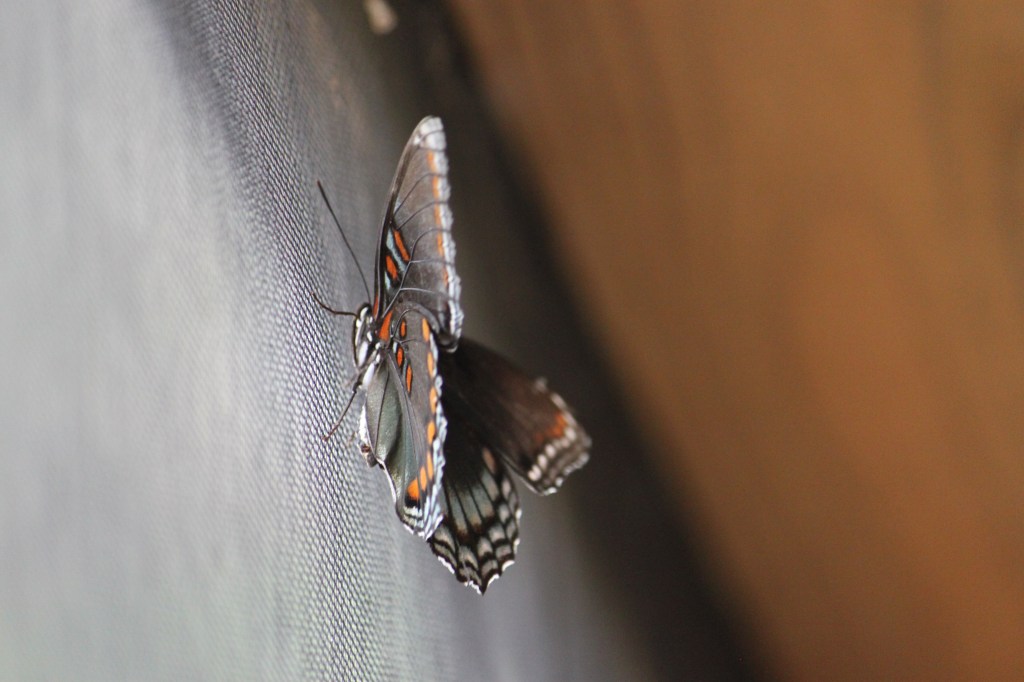
A transformation began that can only be described as the transition in form from caterpillar to butterfly. The cocoon of cancer and its treatment moved him to a higher plane of existence.
He made friends, became a leader among peers, learned to race remote-control cars, met a girl. He lived in the few short months before his death more deeply than he might have lived in decades of life as usual.
I’m saying more than the predictable quality-versus-quantity illustration.
There is deep beauty in our losses. In losing distraction we gain substance. Often only time and a deep abiding grace reveal the gifts, pearls formed by years of raw inner discomfort. Our failure as humans is to not see the gains for what they are. It requires practice to be grateful, to admit we cannot understand how suffering opens us to joy, to let go of the outcome and simply experience each moment of the ride around the proverbial race track.
A related truth is it’s never too late to begin living. Start where you are.
There is simply no gauge to grace, no measure to the miraculous.
Tell never, should and always I said that.
Good wins.
~~~
Now am I suggesting my own path will follow the pattern of struggle, enlightenment, freedom and death?
In ways, yes. We’re all meant to die.
However, that doesn’t ring true as my short-term outcome. Every message I receive along the way points toward life. I cite a becoming-alive-through-death story, the extreme example, to offer that there is always hope.
Down here on Earth, in the here and now, things are looking up. Losing stubborn independence is an increasing gift for me. Being honest and vulnerable opens me and those around me to deeper, more honest and fulfilling relationships.
As to the dirty details, there’s a medication said to calm inflammation and reduce flares. It takes at least two months to become effective, and I’m on week three. Steroids are now off my pharmaceutical palette because of side effects. I’m looking at six to eight weeks of increasing symptoms, including swallowing and breathing difficulty. Nothing terrible lasts forever. It’s just a matter of weeks. I mean, 20 years is something big. A couple of months, no problem. If the medication doesn’t work, there are others. Worry about what-ifs is borrowing trouble. I choose the here and now.
Those are the facts. One benefit of the second half of life is the understanding, the intrinsic knowing, that there are more important things than facts.
Life can be funny and also ironic. It is always beautiful, even in its pain. It is better to live one day freed from age-old constraints than survive captive forever.
The second half of life isn’t made available to everyone. Not all who are invited choose to attend the party. As I told a friend this week, just like the Academy Awards, it really is an honor just to be nominated (insert middle finger here).
It’s also true.
The paradox of healing amid ill health is a treasure, most days. It is an honor and a blessing, even though it can be hard to see. There are worse things than 20 years without a day of feeling truly well.
One worse thing is never opening one’s sure-fire defenses to live in the fullness of life even for a moment. It kind of stinks what it can take to get us there. Some of us are just more stubborn than others. I thank the creator of this fabulous universe for not giving up on me and for lovingly if not dramatically getting my attention every now and then.
Toni Morrison wrote, “You wanna fly, you got to give up the shit that weighs you down.”
Never, should and always, this includes you. I have a new lexicon of living, an unspoken language with more levity; you’re no longer necessary. I do appreciate what you gave during the time I needed you. That time, however, is over; I’m resting somewhere else.
I close with nothing but thankfulness.
To the fount of every blessing that countered my defiant invitation to the brain tumor with a 20-year journey across the desert, I nod in humble gratitude. The loss of physical health and ability and has freed my spirit to lean into the fullness of life, an incomprehensible and undeserved gift.
May each moment be well lived.
Never/should/always: REFRAIN (click if you dare)
~~~
© Mitzi Viola, 5/30/16


 Lost Corner Letters
Leave a reply to Louise Hilbert Cancel reply